A comms plan (communications plan) is the big picture for how a brand reaches and speaks to people at each stage of the funnel. On one page, it outlines what to say, to whom, when, where, and why—all in service of a specific business or marketing goal.
Below is a comms planning model, adapted from Chris Huebner. There’s no single right way to do this, but this model brings together what consistently works.
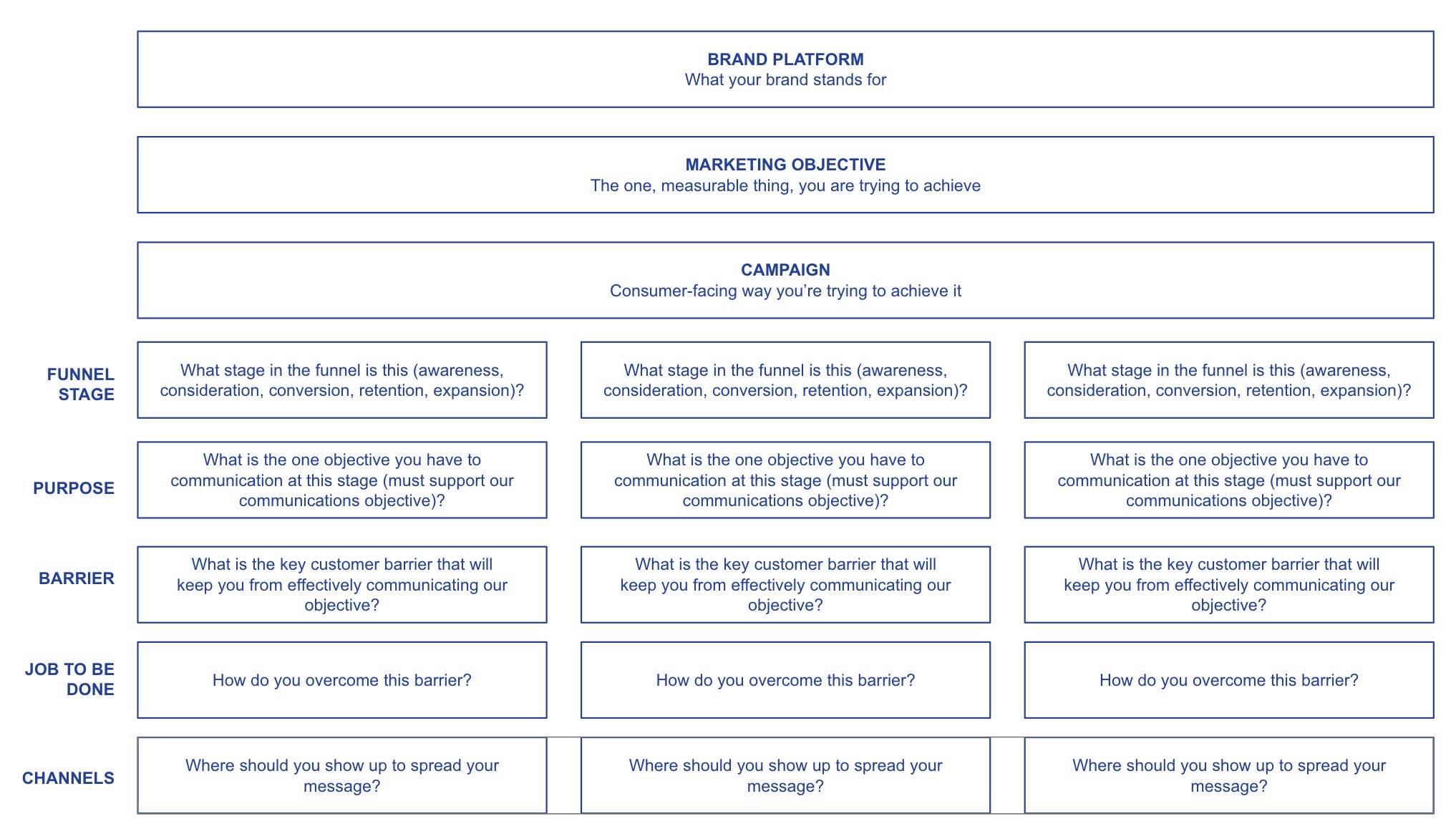
While the framework itself is simple, filling it in is not. A strong comms plan requires a real understanding of media, the brand, and the audience.
Before you begin comms planning, the brand platform, marketing objective, and campaign should already be defined. Channel choices at each stage are typically informed by a media planner.
The funnel stages flow left to right from awareness to consideration to conversion, and often onward to retention and advocacy. Which stages you focus on depends entirely on the marketing objective. If you’re introducing something new, you’ll lean toward the top of the funnel. If you’re re-engaging existing customers, you’ll focus lower down. (For a deeper breakdown of the marketing funnel, see this post.)
All the other components in a comms plan are informed by what you know about the brand and the audience. If it doesn’t fit together, the plan doesn’t work. Below I break down the key question to ask at each stage and where to look to find the answer.
Purpose: Given where someone is in the funnel, what is the one thing communications must help them do next, in a way that makes sense for the task and the audience? Awareness = notice or remember you. Consideration = understand why you’re different. Conversion = feel confident enough to act
Tip: What is the mindset or behavioral change you’d want people to have as a result of seeing these communications?
Barrier: At this stage, what is specifically stopping someone from moving forward? Barriers change as people move through the funnel. Early on, it might be indifference, confusion, or lack of awareness. Later, it’s more likely doubt, risk, or inertia
Tip: Ask: “Why would someone not take the next step right now?”
Job to be done: At this stage, what must the communication help someone understand, believe, or feel to overcome that barrier? Early stages often require emotional or mental reframing. Later stages often require reassurance or proof
Tip: What is the one thing people need to hear to overcome the barrier they’re facing?
⭐ Paid subscribers can see a filled example for Glossier at the end of this post.
1 ACTION TO TAKE
Pretend you work at Oreo and you’re tasked with building a comms plan for an upcoming holiday campaign targeting older Americans (65+).
Below is the information you already have. Your job is to fill in the rest of the comms plan.
Brand platform: Stay Playful — Life is better when you approach it with curiosity, humor, and a willingness to enjoy small moments of fun at any age.
Marketing objective: Sell X% more Oreos to 65+ y/o Americans this holiday season.
Campaign: The Holidays Are Long — The holidays last for weeks (and often feel longer). Oreos give you something to enjoy all the way through.
Channels: Media is working on these in tandem and will slot them into the plan later.
1 QUOTE TO INSPIRE
“A goal without a plan is just a wish.” —Antoine de Saint-Exupéry
Goals don’t become real without a plan. A comms plan is how a brand turns ambition into direction, and direction into action.
Next week, we’ll be diving into easy ways to make better designed decks. Chat then!
⭐ Paid subscribers can see a filled example for Glossier below.
