Thursday, December 5, 2013

10 Trends That Will Shape Our World in 2014 and Beyond

Published 4:00 pm, Wednesday, December 4, 2013

  • Photo: PRWeb


JWT report spotlights The Age of Impatience, Raging Against the Machine and Mindful Living, among other trends.
New York, NY (PRWEB) December 04, 2013
JWT, the world’s best-known marketing communications brand, has released its ninth annual forecast of key trends that will drive or significantly impact consumer mind-set and behavior in 2014 and beyond.
According to the forecast, we’ll see consumer expectations for speed and ease rise exponentially with the mainstreaming of the on-demand economy and our always-on culture. As businesses respond in kind, making the availability of their products and services more instant, impatience and impulsiveness will only continue to increase. Meanwhile, the mobile device is coming to represent a gateway to opportunity for underserved populations in emerging markets—helping people change their lives by giving them access to financial systems, new businesses tools, better health care, education and more.

The forecast also puts a spotlight on the growth of immersive experiences, the accelerating shift to a visual vocabulary, the new appeal of imperfection, and the rise of telepathic technology, which will enable brands to better understand minds and moods and react in a very personalized way.
Other trends cited in the report include: 
  • The End of Anonymity: Thanks to an array of new technologies and a growing drive to collect personal data, it’s becoming nearly impossible to remain unobserved and untracked by corporations and governments. As anonymity becomes more elusive, expect pushback from consumers and a growing paranoia around technologies and services that affect privacy.
  • Raging Against the Machine: As we move further into the digital age, we’re starting to both fear and resent technology, fretting about what’s been lost in our embrace of technology and the unprecedented pace of change. We’ll put a higher value on all things that feel essentially human and seriously question (while not entirely resisting) technology’s siren call.
  • Remixing Tradition: With social norms quickly changing and a new anything-goes attitude, people are mashing up cherished traditions with decidedly new ideas, creating their own recipes for what feels right.
  • Mindful Living: Consumers are developing a quasi-Zen desire to experience everything in a more present, conscious way. Once the domain of the spiritual set, mindful living is filtering into the mainstream, with more people drawn to the idea of shutting out distractions and focusing on the moment.
“Consumers are both welcoming and resisting technology’s growing omnipresence in our lives—for many, technology is a gateway to opportunity, but those who are most immersed are starting to question its effect on their lives and their privacy,” says Ann Mack, director of trendspotting at JWT. “One result is that more people are trying to find a balance and lead more mindful, in-the-moment lives.”
JWT’s “10 Trends for 2014 and Beyond” is the result of quantitative, qualitative and desk research conducted by JWTIntelligence throughout the year and for this report. Specifically for this report, JWTIntelligence conducted quantitative surveys using SONAR™, JWT’s proprietary online tool, from Nov. 5–8, 2013, surveying 1,003 adults aged 18-plus (500 Americans and 503 Britons). The report includes input from nearly 70 JWT planners and researchers across more than two dozen markets, and interviews with experts and influencers across sectors including technology, health and wellness, media and academia.
“With our annual trends forecast, our aim is to understand the forces of change that are shaping culture, consumer behavior and business, and actively participate in driving that change,” says Bob Jeffrey, Chairman and CEO, JWT Worldwide. “This type of intelligence allows us to identify emerging opportunities in the global marketplace that we can leverage on behalf of our multinational clients.”
Among the trends JWT has forecast in past years: “Play as a Competitive Advantage” in 2013 (more adults adding play into their lives to foster imagination, innovation and creativity—all competitive advantages); “Food as the New Eco-Issue” in 2012 (the environmental impact of our food choices is becoming a prominent concern); “De-Teching” in 2011 (more people logging off, at least temporarily, to get a break from technology); “Location-Based Everything” in 2010 (the explosion of location-based or -aware services that leverage data from mobile phones); “The Small Movement” in 2009 (the shift away from “bigger is better” in everything from homes to cars to stores); and “Radical Transparency” in 2008 (the “nothing to hide” ethos seen in some online behaviors)
.

Tablet Stats Update

A TabTimes executive summary

This continuously updated page reports the latest data and trends in the tablet industry and related ecosystems.
December 5, 3013

1. Tablet devices

Tablets are driving a wave of adoption more quickly than that of laptops and smartphones.

1.1. Tablet device ownership

More people than ever are discovering the benefits of tablets over conventional PCs and laptops.
American adults aged 18 and older who own a tablet
2010: 3%
2011: 8%
2012: 18%
2013: 34%
(source: Pew Internet & American Life Project report, June 2013)
American aged 8 to 64 who own a tablet
2012: 30%
2013: 44%
(source: Frank N. Magid Associates, June 2013)
American aged 12 to 64 who own a tablet
2013: 52%
2014: 64% (forecast)
(source: Frank N. Magid Associates, June 2013)
Physicians who own a tablet
2011: 30%
2012: 62%
2013: 72%
(source: Manhattan Research, April 2013)

1.2. Tablet device sales

1.2.1. Overall sales

In the first three months of 2013, a total of 49.2 million iPad, Samsung Galaxy Tab, Google Nexus, Kindle Fire, Microsoft Surface and other tablets shipped to retailers for sale. That’s more than all the tablet devices shipped in the entire first half of 2012. (source: IDC)
Tablet shipments
2012:  144.5 million
2013: 221 million (forecast); +53.5% vs. 2012
2014: 270 million (forecast); +22.2% vs. 2013
2017: 386 million (forecast)
(source: IDC, December 2013)
IDC says tablets unit sales will surpass portable PCs en 2013 and all PCs in 2015.
Gartner’s predictions are even higher: they forecast a 68% increase in tablet shipments in 2013 vs. 2012.
Cultural shifts in workplace devices through “bring-your-own-device” (BYOD) have also contributed to more tablet and other mobile device shipments, the reports noted.
Tablet shipments
2012:  113 million (actual)
2013: 195 million (est.)
2014: 285 million (forecast)
2015: 323 million (forecast)
2016: 358 million (forecast)
2017: 396 million (forecast)
(source: Canalys, November 2013)
Tablet sales
2013 vs. 2012: +38.9%
(Source: Gartner, July 2013)
2013: $72 billion
(Source: ABI research, June 2013)

1.2.2. Sales by manufacturer: Another bite out of Apple

Not all brands are expected to see sustained growth rates. Apple in particular may end up with fewer devices in the hands of consumers in the future.
Market share by manufacturer
Q3 2012
Apple: 40.2%
Samsung: 12.4%
Asus: 6.6%
Lenovo: 1.1%
Acer: 0.9%
Others: 38.8%
 
Q3 2013
Apple: 29.6%
Samsung: 20.4%
Asus: 7.4%
Lenovo: 4.8%
Acer: 2.5%
Others: 35.3%
(source: IDC)
OS market share in tablet unit sales in Q2 2013
Android: 53% (of which Samsung: 22%, Amazon: 5%; Lenovo: 4%; Acer: 4%; others: 23%)
Apple/iPad: 43%
(source: Canalys, August 2013)
OS market share in tablet unit sales
2012 (actual): Apple 58%, Android 40%, Microsoft 2%
2013 (estimate): Android 58%, Apple 38%, Microsoft 4%
2014 (forecast): Android 65%, Apple 30%, Microsoft 5%
2015 (forecast): Android 64%, Apple 29%, Microsoft 6%
2016 (forecast): Android 63%, Apple 28%, Microsoft 8%
2017 (forecast): Android 63%, Apple 27%, Microsoft 10%
(source: Canalys, November 2013)
OS market share in tablet unit sales
2012 (actual): Android 52%, iOS 45.6%, Microsoft 0.9%; Other: 1.4%
2013 (forecast): Android 60.8%, iOS 35%, Microsoft 3.4%; Other: 0.8%
2017 (forecast): Android 58.8%, iOS 30.6%, Microsoft 10.2%; Other: 0.4%
(source: IDC, December 2013)
Researchers note that the tablet game is still Apple’s to lose and the iOS operating system supports a very healthy ecosystem of iPads and iPhones.
“Apple is currently the more homogeneous presence across all device segments, while 90 percent of Android sales are currently in the mobile phone market and 85 percent of Microsoft sales are in the PC market,” says Carolina Milanesi, research vice president at Gartner.
Much of Apple’s slimmer slice of the overall tablet pie has been attributed to the increase in low-cost Android-based devices worldwide. Samsung, Asus, and Amazon continue to build more impressive devices as well as multiple form factors. The increased interest in Windows 8.1 by businesses may also dampen any gains by Apple in mobile device domination.

1.2.3. Sales by product segment: Size and price matter

Price-conscious consumers are beginning to adopt less expensive tablets instead of premium-priced ones. The popularity of the iPad mini is a testament of that trend.
Share of the iPad mini
2013: 60% of iOS tablet sales

The shift to smaller form factors has been aggressive over the last two years but will only slightly increase over the next four. The anticipated slowed growth is likely due to homes with multiple devices that embrace cheaper tablets for media consumption and simple communication.
Worldwide tablet market share by screen size band
 
2011
< 8": 27%
8" – 11": 73%
11"+: 0%
 
2013
< 8": 55%
8" – 11": 43%
11"+: 2%
 
2017 (Forecast)
< 8": 57%
8" – 11": 37%
11"+: 6%
 
Source: IDC, May 2013

Lowering the cost of owning a tablet has helped increase sales overall.
Worldwide average selling price for tablets 
2013: $381
Variation vs. 2012: -10.8%
To put this in perspective, in 2010, the original iPad sold for $499.

1.2.4 Sales to corporations vs. consumers

Percentage of tablets owned by businesses
By the end of 2012: 11% (est.)
By the end of 2017: 18% (proj.)
(source: Forrester Research, August 2013)
Share of tablet shipments going to enterprise
2013: 13% (proj.)
2017: 20% (proj.)
(source: IDC, August 2013)

1.3. Tablet users

Percentage of Americans ages 12 to 64 who own or use a tablet owned by someone else in household
2011: 20%
2012: 33%
2013: 52%
2014: 64% (proj.)
(source: Frank N. Magid Associates, Oct. 2013)
UK tablet users (in millions)
2012: 14.1 (est.)
2013: 20 (est.)
2014: 24.6 (proj.)
2015: 28.2 (proj.)
2016: 31.8 (proj.)
2017: 34.8 (proj.)
(source: eMarketer, Oct. 2013)

2. Tablet apps

App explosion expected

Apps are the lifeblood of the tablet ecosystem.
Tablet app market
Projected revenue in 2013: $8.8 billion
Share of all mobile application revenue in 2013: 35%
Year when tablet will overtake smartphone app market: 2017
(source: ABI Research)
80% of these apps will be for games, digital publishing, social networking, and e-commerce
(source: ABI Research)
By 2017, more than 160 billion apps will be downloaded globally onto consumer handsets and tablets
(source: Juniper Research)
Number of jobs created in the US by app economy: 500,000 (source: MobileFuture.com)
App market in 2013: $25 billion; by 2017: $46 billion (proj.) (source: MobileFuture.com)
While that might sound like a lot of versions of Angry Birds, business and productivity apps are beginning to make a strong showing, albeit with many challenges.
“While productivity apps are getting better, they are still a sub-par experience on the tablet when compared to the PC,” Jitesh Ubrani, a senior analyst with IDC, told TabTimes. “This has led to slower adoption in business when compared to other commercial segments such as education.”
Non-work related tablet apps tend to offer a far more enriching experience than their web-based counterparts or native PC apps, Ubrani adds. For everyday tasks, the ease of use and personal nature of the device, make tablets an ideal primary computing device.

Challenges for developers

Nevertheless, the challenge remains for developers to profit from their apps, as the downward pressure on pricing leaves many the only option to offer their apps for free at the point of download.
Apps paid for at the point of download (estimate)
2013: 6.1%
2017: 5%
(source: Juniper)
Apple’s App Store and Google’s Play are expected to improve their discovery services for consumers, as the influence of Amazon’s Appstore recommendation engine becomes more prominent.
The rise of the app store has also effectively cut many Mobile Network Operators (MNOs) out of the conversation.
Juniper analyst Sian Rowlands points out that “carrier billing has become an increasingly viable option for MNOs who want to see a share of app store revenues, and also for app stores who want to distribute their content to unbanked consumers. However, MNOs must realise they won’t see as great a revenue share as they did during the pre-app store era”.

3. How tablets are used

OS share of online traffic
iPad: 84.3%
Kindle Fire: 5.9%
Samsung Galaxy Tab: 4.2%
Nook: 1.2%
(source: Chitika, based on ad impressions on its network in the US and Canada, June 2013)
Orientation used on iPad
Landscape: 60%
Portrait: 41%
(source: OnSwipe, based on ad impressions on its network, June 2013)
Sharing platforms used on iPad
Email: 55%
Facebook: 29%
Twitter: 13%
Pinterest: 3%
(source: OnSwipe, based on ad impressions on its network, June 2013)
Tablet magazine readership
Read magazines on tablets: 23%
Bought single issue or subscription in last 30 days:13%
(source: The Mequoda Group, US adult tablet users, June 2013)
Tablet shopping by tablet owners
Likely to purchase physical items: 38%
Do product research: 59%
Make purchases fom home: 95%
(source: Nielsen, August 2013)
Tablet entertainment (12 to 64 year olds)
Likely to use as primary entertainment platform: 52%
Likely to use in front of the television: 57%
(source: Frank N. Magid Associates, October 2013)
Tablet gaming
Likely to play games on their tablet: 69%, with 31% of these gamers participating in in-game transactions. Average spent on mobile games (2012-2013) $48 (annual)
Total in-game spending $914 million (annual)
(source: Frank N. Magid Associates, October 2013)
This document was last updated on December 4, 2013

Tuesday, December 3, 2013

Tumblr launches another mobile ad product

Tumblr launches another mobile ad product

With its newest native ad, the Yahoo-owned blog network is promoting advertisers' Tumblr blogs to audiences on Android and iOS.
Twentieth Century Fox's Sponsored Trending Blog unit, featured in the Explore section of Tumblr for Android and iOS, promotes the "Devil's Due" blog.
(Credit: Tumblr)
Tumblr will start the new year off with a new way to make money from its mobile audience, but it's giving members an early preview of what to expect.
Monday, the Yahoo-owned blogging platform soft launched a new ad unit called "Sponsored Trending Blogs" that pushes advertisers' Tumblr blogs in front of people checking out the Explore tab in the Tumblr for iOS and Android application. The unit marks Tumblr's fifth ad product and its second tailored just for mobile.
The Sponsored Trending Blogs ad offering is scheduled to make its official debut in January 2014, but people will start to notice promoted blogs in the Explore feed from beta partners such as Turner Broadcasting, Delta, Twentieth Century Fox, Calvin Klein, and Sony Pictures Entertainment. The Explore tab is home to popular tags and a curated selection of blogs trending across the service, and gives users a quick way to see what the people of Tumblr are paying attention to each day.
The new ads are native to Explore, meaning they take on the exact look and feel of other trending blogs featured in the mobile feed. The only difference is a subtle dollar sign icon denoting that the featured blog is promoted by an advertiser.
Tumblr's latest ad initiative comes six months afterYahoo purchased the popular blog network for youngsters for $1.1 billion. Though the service only reportedly made $13 million in revenue in 2012, it's made a conscious effort to ramp up advertising in 2013.

Omni-Channel Experiences, Still Far from Reality!!!

Omni-Channel Experiences, Still Far from Reality!!!

Fragmentation to ConvergenceCan you complete let alone win a Formula One race with flat tires?

Don’t think I need to answer that question but am sure you’re thinking, what in the world is this guy writing about and what has this got to do with omni-channel experiences. Well, it does because I feel the same way every time I think about driving omni-channel frictionless consumer experiences.
Why? – Because we are trying to create a world of connected experiences on top of a massively “fragmented” foundation. Take a read:
Pretty much anyone who has been directly or indirectly involved with marketing, eCommerce, consumer experiences, brand strategies or figuring out unique ways to engage consumers across various online & offline touch points,  would have experienced or expressed a strong vision & desire to move from being multi-channel to cross-channel and now omni-channel. And it hasn’t just been a change of phrases we all so dearly love but a reflection on how the consumer engagement and the entire ecosystem has evolved with all strategies driven by a single most desirable outcome – enabling seamless, frictionless omni-channel consumer experiences.

But have brands truly been able to drive “omni-channel” consumer experiences consistently?

The answer is a big NO despite strategies, agency partnerships, availability of data and technology and of course most importantly a well defined vision. There have been instances of brands driving these connected seamless experiences but these have been rather far and few, limited to specific campaigns or programs that may have lasted a few weeks or months at best but nothing which is “always on”. So what is preventing this to happen? It’s FRAGMENTATION that exists in three core areas :

 1. Fragmentation in Marketing Technology Ecosystem

A foundational challenge often acknowledged globally however still unresolved primarily because it requires a fundamental shift in the technology ecosystem. The types of marketing solutions and solution providers would need to evolve from solving problems in compartments like data, analytics, CRM, customer experience, eCommerce and others to thinking about “experiences” that span across channel & media spectrum. Refer to Gartners’s marketing technology
Marketing Technology Landscape
transit map or Scott Brinker’s famous marketing technology landscape, driving a connected seamless experience requires stitching these different pieces leveraging both data & technology at its core. This does not only involve a complex and challenging data integration process but also a reasonably expensive initiative that involves multiple technology vendors and a world class System Integrator who knows what he is doing and is able to converge creative, media, brand strategy and technology together. So either brands need to continue to stitch these pieces with millions of dollars OR we finally have a Marketing Operating System (a concept I am passionate about) that does that for marketers out of the gate. With all the technology acquisitions by Adobe, IBM, Oracle and Salesforce of the world, this may be a reality soon. Sitecore’s recent acquisition of the commerceServer is another step in this direction.Slide1

 2.   Fragmentation in Data

As brands and agencies scramble to adopt multiple technology platforms to drive consumer engagement across channels, the natural outcome is a world of fragmented data sets. While technology innovation is leading to the capture, extraction and storage of a lot of more data or if I may dare to say “big data”, it is still isolated by channel which then requires a herculean effort to connect this data into an “Enterprise Data Management Platform”. Historically the concept of a DMP has focused more on 1st party and 3rd party audience data to drive targeting and personalization for display advertising but it now needs to expand that reach across channels and be the sole “data management layer” that connects with “any” media or content publishing technology in your ecosystem, across paid, owned & earned channels. Of course easier said or written than done but possible at least once a more consolidated technology system sits on top that eventually drives a more unified data collection – a true 360 view of the consumer.

3. Fragmentation in Agency & Operating Model

While the technology & data fragmentation is more obviously noticeable, the fragmentation in the underlying agency operating model goes unnoticed. What does that mean? Two very simple facts:
  • Even with the Digital AORs how many brands use multiple specialized agencies to manage Search, CRM, eCommerce and so on while the digital AOR drives the broader brand strategy. This isn’t the root cause but a symptom of agencies that are yet to become omni-channel in their own capabilities
  • Secondly, if brands do happen to engage a single agency across channels, the service model within the agencies will enforce a fragmented team structure. On one hand that’s great because it provides subject matter experts and specialists across channels but more often than not, it leads to a very myopic & isolated view of the consumer. It lacks a horizontal cross channel perspective from anyone on the agency side.
While I am sure there may be enough fallacies to my hypothesis but I am also sure that for every single brand that is enabling an omni channel seamless consumer experience, you will find another 99 that are struggling because of the fragmented ecosystem. There is no single solution however a gradual shift towards a holistic and connected technology ecosystem will play a fundamental role in getting us there.
- See more at: http://inspiremartech.com/blog/omni-channel-experiences-so-far-from-reality/?goback=%2Egde_62352_member_5811211358632452098#%21

I was fortunate to speak at shop.org with Jacob Hawkins of aeropostale. They are doing some really amazing things from an omnichannel perspective.


m2o 11 248x300 From Multichannel To Omnichannel & BeyondOver the years, my background in IT marketing and product management has brought me close to the subject of how a software should be extended to new channels. I can recall at least five occasions on which I’ve been involved with spec’cing channel support in the past 15-odd years:
  • ERP in Branch Office in the mid ’90s
  • Internet ERP in the late ’90s
  • Electronic Bill Payment in the mid ’00s
  • Mobile Banking in the late ’00s, and
  • Social Media Sales and Customer Support in the last one year.
On each occasion, the initial expectation of the market was identical: The software must do everything on the new channel that it did on all the old channels. Attribute it to customers affected by hype or consultants sitting in ivory towers or whatever, but a software gained legitimacy to its claim of supporting a new channel only when it permitted every step of every business process to happen on the given channel. Let me call this the “multichannel support” wave.
In each instance, it took a few years for the market to appreciate that each channel had its own strengths and accept that there was nothing wrong if the software only supported those features that played up to the strength of the respective channel. For example, since Internet was a great way to extend an ERP to customers, suppliers and partners without requiring specialized hardware or leased lines, it became okay for ERPs to only support marketing, sales and channel processes via the web to begin with.
m2o 06 300x200 From Multichannel To Omnichannel & BeyondSoon thereafter, the market recognized that there was no point in making the software support a certain feature on a certain channel when the corresponding business process wasn’t likely to happen on that channel. Out went “web-enabled MRP” from an ERP’s production module, for example.
It took a while longer for customers to understand that their internal and external stakeholders don’t think so much in terms of channels as overall user experience. And for vendors to respond by offering superior UX by splitting a single business process across multiple channels in such a way that each channel leveraged its strength and the customer found each hop natural. I call this “omnichannel support”. Or “interconnected retail”, as Home Depot’s CEO Frank Blake calls it in this FORTUNE magazine interview to describe ”as seamless an experience as possible for you as a consumer, whether you’re interacting online or in the store.”
To take “buy mortgage product” as an indicative business process in the context of a retail bank, omnichannel would translate to the following steps on different channels:
  1. Mobile: Hear about a new low-interest mortgage product from a friend on social media
  2. Desktop: Check out the online buzz about this product, visit the bank’s website to learn more about it
  3. Branch: Find out the finer points of this product, sign up for it, fill forms, and submit documentation.
As I’d highlighted in Jumping On The Omnichannel Banking Bandwagon, multichannel banking is neither necessary nor feasible in most cases and omnichannel banking is the practical way forward for most banks. I recently noticed that omnichannel commerce also fits in nicely with the new buyer journey postulated by McKinsey.
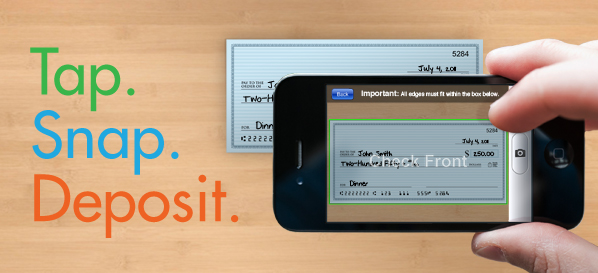
MobileRDC 01 300x136 From Multichannel To Omnichannel & BeyondOnce all key processes are omnichannel-enabled, or even in parallel, I envisage the next wave of channel support in which a bank develops new functionality that exclusively leverage the strengths of a given channel. For example, Mobile Remote Deposit Capture and ATM Driving Directions, which are features that exploit camera, GPS, accelerometer and other standard smartphone features that are absent from all other channels. For the lack of a better expression, let me call this “omniplus commerce” for now.

Monday, December 2, 2013

Marketers Find Success on Social Through Customer Engagement

Marketers Find Success on Social Through Customer Engagement
  • Dec 2, 2013
  •  
Marketers choose quality over quantity when adding social followers
Quality beats quantity when it comes to measuring social media effectiveness, according to an August 2013 study by ExactTarget. The survey found that 38% of US Facebook and 43% of Twitter marketers were more concerned with the quality of audience members added via social efforts than with the number of followers gained.
When setting social media objectives, an overwhelming majority of respondents—77% of Facebook and 70% of Twitter marketers—cited brand awareness as their top goal. Gaining customer insights/improving retention was also popular.
Results from more recent polling conducted in November 2013 by Ascend2 also determined brand awareness and customer engagement—which leads to customer insights and improves retention rates—were the top social marketing objectives among marketing professionals worldwide for the upcoming year, indicating that these global trends aren’t going away anytime soon.

Though throwing a Facebook or Twitter button on a website may be easy, cheap and common, respondents to ExactTarget’s survey didn’t find this nearly as effective as tactics requiring a little more effort and interaction—suggesting that quality content leads to quality results.

While providing service and support was not a top social objective, cited by just 22% of marketers from each group, tactics in this category proved very effective. Only 27% of marketers on Twitter and 34% on Facebook said they publicly answered customer service questions on the social platforms, yet 60% and 69% of respondents, respectively, reported this as effective. Offering FAQs and how-tos also had low usage rates among marketers, but at least half of respondents from each group found this effective.