Showing posts with label Visual Content. Show all posts

Monday, March 13, 2017

Visual Content Marketing 2017: Trends that Will Attract + Resonate with Your Audience

It’s only a few months into 2017, but brands are already making their presences known – in a big way. Concepts and visuals are stronger than ever in this year’s content marketing efforts.
“We’re in a golden age of visuals, and content is king,” says Pam Grossman, Getty Images’ Director of Visual Trends. “2017 is all about images that are bold, impactful, and evocative.”
Each year, Getty releases an annual trends report on the types of images that most resonate with viewers and leave lasting impressions. Here’s a look at the 2017 list, inspiring examples from brands, plus tips on incorporating these new visual cues into your content marketing. 

Virtuality

Man wearing virtual reality headset
The digital realm has infiltrated just about every aspect of our daily lives, and more brands are experimenting with virtual reality (VR).
Virtuality is about the cutting edge technologies that make these new realities possible, but even more so about the changing definition of being human in an age that continues to elevate our existence.   
Aesthetically, the trend expresses itself through first-person perspectives and images that evoke a shared experience. We’re no longer merely looking at visuals; we now have the capacity to step inside them.
According Alli Echelman, Content Marketing Specialist at Getty Images, it’s “about creating a deeper connection with your audience. Including VR and 360-degree imagery allows you to engage on an entirely new level and actually immerse your audience within your story.”
The enormous potential for virtual engagement spans industries, and falls perfectly into place with travel, in particular. One of the latest efforts comes from the Tourism Authority of Thailand, which unveiled four 360-videos giving viewers a taste of what it would be like to visit and explore the Southeast Asian country. The result? A incredibly immersive, interactive, and inspiring campaign that’s sure to ignite wanderlust in viewers and get people packing for a trip to the Land of a Thousand Smiles.
Tip: VR and 360-degree videos are still big investments for brands, but they’re becoming increasingly accessible. These days, it takes more to win and sustain your audience’s attention. A virtual experience can offer them a new way to see, interact with, and remember your brand. (See the end of this story if you’re considering getting into the space.)

Color Surge

bright sparks on colorful background with bokeh effect
More rainbow-powered than tech-fueled, this trend is Getty’s answer to a recent resurgence in vivid color.
We’re seeing less of the 70s’ filter look and a rise in daring and sometimes strange color combinations, coming together in a new wave of visual sophistication.
The 2017 awards season was full of it: the bright blues, reds, and yellows of “La La Land,” the lush, shiny, greenish-blue hues of “Moonlight,” and the deep gem tones of “Nocturnal Animals” all worked to contribute a measure of magic to the films. 
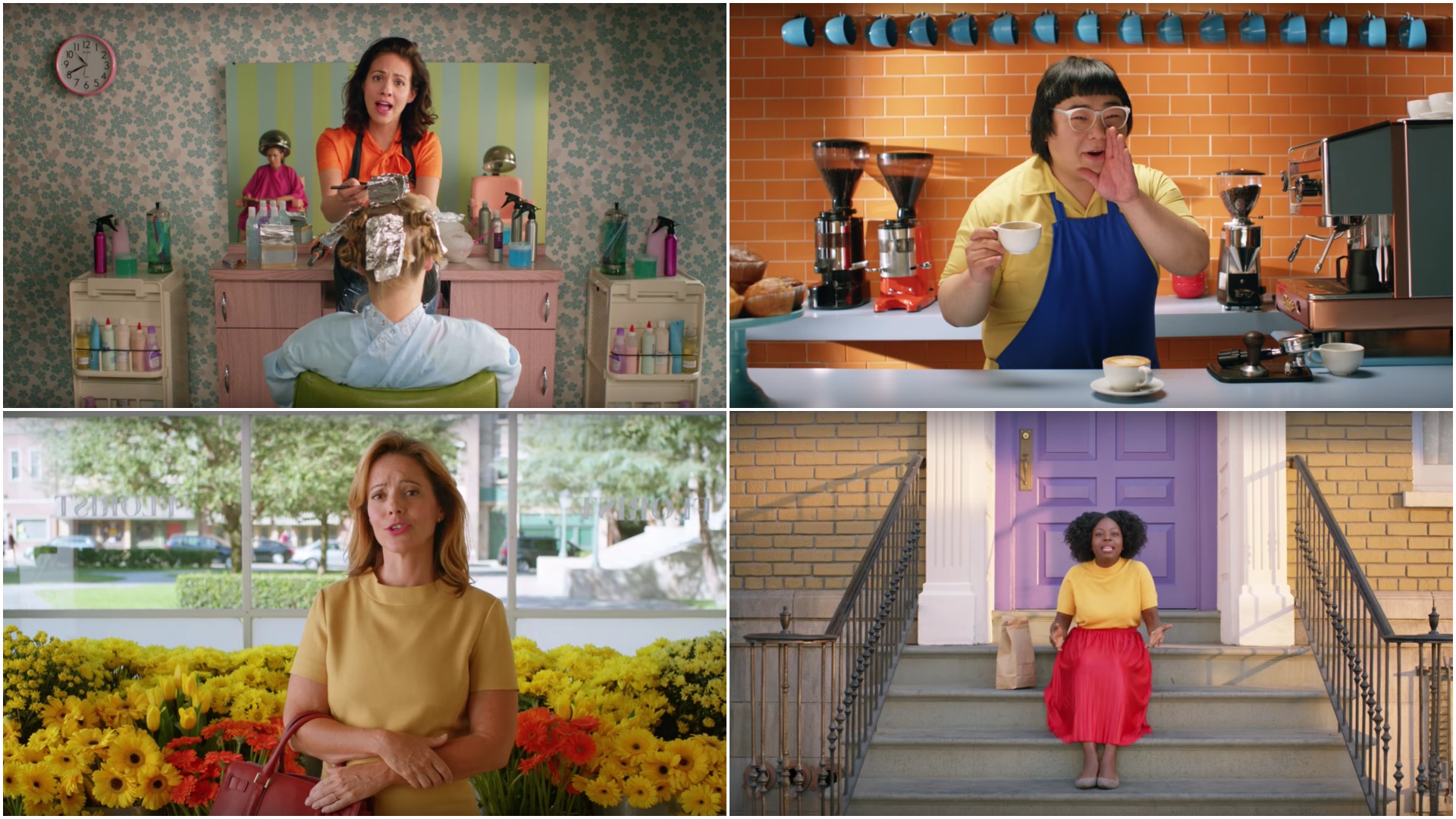
And speaking of cinema, thanks to the work of Roman Coppola, we’re seeing a surge of color in branding as well.
Color Surge.jpg
He’s the director behind real estate giant Re/Max’s recently released series of light-hearted ads that feature quite the colorful cast of characters. The campaign’s blend of bright backdrops and entertaining dialogue certainly leaves an impression, catching the eyes and ears of viewers just long enough to deliver the moral of the story (which also happens to be its title) – that “A Re/Max Agent Knows.”
Tip: Experiment and push the boundaries of your palette. Can your use of color tell a story all its own? Where in your content or brand strategy are you able to sneak some in? Think outside the box, do something unpredictable, and don’t be afraid to color past the lines. 

Unfiltered

traveller
Unfiltered is the next iteration of what it means to be truly authentic.
It’s no secret that standing out in today’s endless flow of content is incredibly challenging. People see through preplanned poses and look straight past stylized shoots. The visual landscape is overly saturated, and in response, the new genuine is taking on more and more of a photojournalistic, documentary aesthetic – as true to life as can be. 
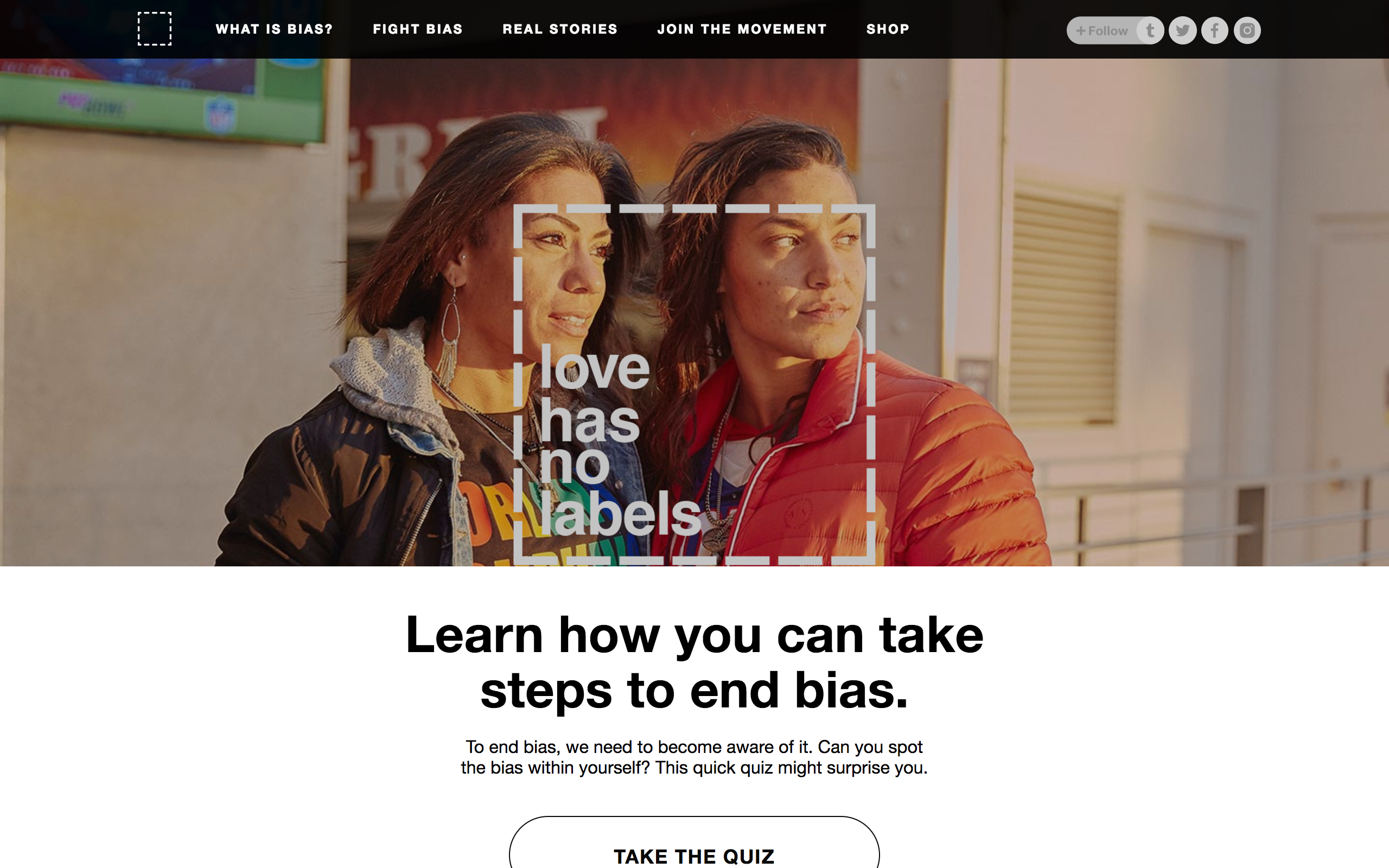
The Ad Council’s newest Love Has No Labels spot, “Fans of Love,” which was filmed at January’s NFL Pro Bowl in Orlando, follows this idea to a T.
The video, which was released on Valentine’s Day, follows a kiss cam celebrating a diverse and multicultural array of friends, families, and lovers – real people in real relationships who were at the game that day. The clip gained more than 3 million views on YouTube within days and is accompanied by a companion site that offers a quiz on bias, additional content on how to combat it, and a make-your-own statement photo function, adorned with the “love has no labels” message.
Screen Shot 2017-02-19 at 10.45.10 PM.png 
Tip: Show real people in your marketing efforts.
Whether it’s through curating a selection of candid images, or encouraging a spike in user-generated content (UGC), think: How can you capitalize on real life people and events? Is there a way to tie your brand values and mission to authentic imagery of what’s really happening around the globe and among your audience members? 

Gritty Women

Woman hitting with punch on gritty determination at fitness boxing
The world’s view of women is changing and brands that aren’t aligned with that shift will be left behind.
Long gone is the image of a pink-loving, salad-eating, heels-no-matter-what, made-up model mom, girlfriend, or lady-accessory. Today’s woman is the star of her own show, and she got there because she earned it. She’s ready to roll up her sleeves, put in the work, and get dirty if need be.
Brands like Reebok are doing their part to emphasize this point.
The company’s “Be More Human” campaign launched in 2015 and is still going strong, featuring fierce females throughout and promoting a newfound dedication to what the brand calls the tough fitness phenomenon.  
“The more effort we put in, the richer our stories become,” reads the companion site. “Be More Human is a tale of constant progress. A movement of like-minded individuals who…[have] chosen to embrace the calluses that show our commitment.”
A lot of those calluses belong to women, and Reebok is sure to spotlight them throughout its content and across social media channels, elevating what it means to be a woman in 2017. 
Tip: Forget the old stereotypes about the fairer sex, and forget that term, too. The future is female, and she’s every woman. Think feminism and the Lean In Movement. Think girl power. Think strong, diverse, intense, and independent. And then apply it to your visuals.

Global Neighborhood

Teenagers Lifestyle Casual Culture Youth Style Concept
In this day and age, the world is getting smaller by the minute. People are traveling more than ever, frontiers are falling away, and cultures are clashing and coming together everywhere, every day.
Global Neighborhood “imagines a post-national world that transcends border and boundary,” says Grossman. “We’re starting to see several brands use regionally specific imagery on the world stage. Viewers are more interconnected and sophisticated than ever, so it’s a smart and timely tactic.”
Apple’s recent iPhone 7 Portrait Mode spots are a beautiful example of this kind of thinking.
In videos that show off the new phone’s stunning camera capabilities, viewers are exposed to everyday life and personalities of a Greek island village, as well as the amazing Brazilian tradition of Carnival. The concepts are simple – as per Apple’s style – but they send a powerful message of inclusion and equality.
“The fact that this ad is essentially a foreign language film aimed at the English-speaking market just goes to show that good stories are universal and unifying,” adds Grossman.
A girl, her grandmother, and the excitement of a shared experience? That’s something everyone can connect to, no matter where they’re from.
Tip: There’s so much beauty in our world. Find the corners that speak to your brand and share them with your audience. Display authentic examples of diversity. Shine a positive light on progress and celebrate the things that make us different and unique – and be sure to show that it’s something to praise, not put down.
“Brands are really starting to embrace concepts that connect us all as humans and bring awareness to people and stories that are often overlooked,” says Echelman. “It’s an opportunity to connect your customers to each other and to your brand.”

New Naivety
New naivety_Whimsical doughnuts.png
Scroll through almost any social media feed and you’ll start to notice something funny – literally.
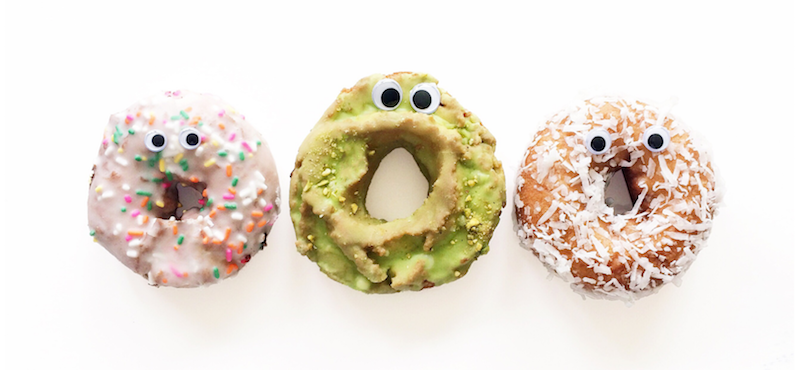
GIFs, memes, and various digital gags abound, commanding our attention and tickling our senses of humor within the seconds they take to consume. If it’s spontaneous, playful, and kind of weird, it’s got the mark of New Naivety, Getty’s final trend, and one that delivers a much-needed dose of comedy.
MailChimp_New Naivety.jpg
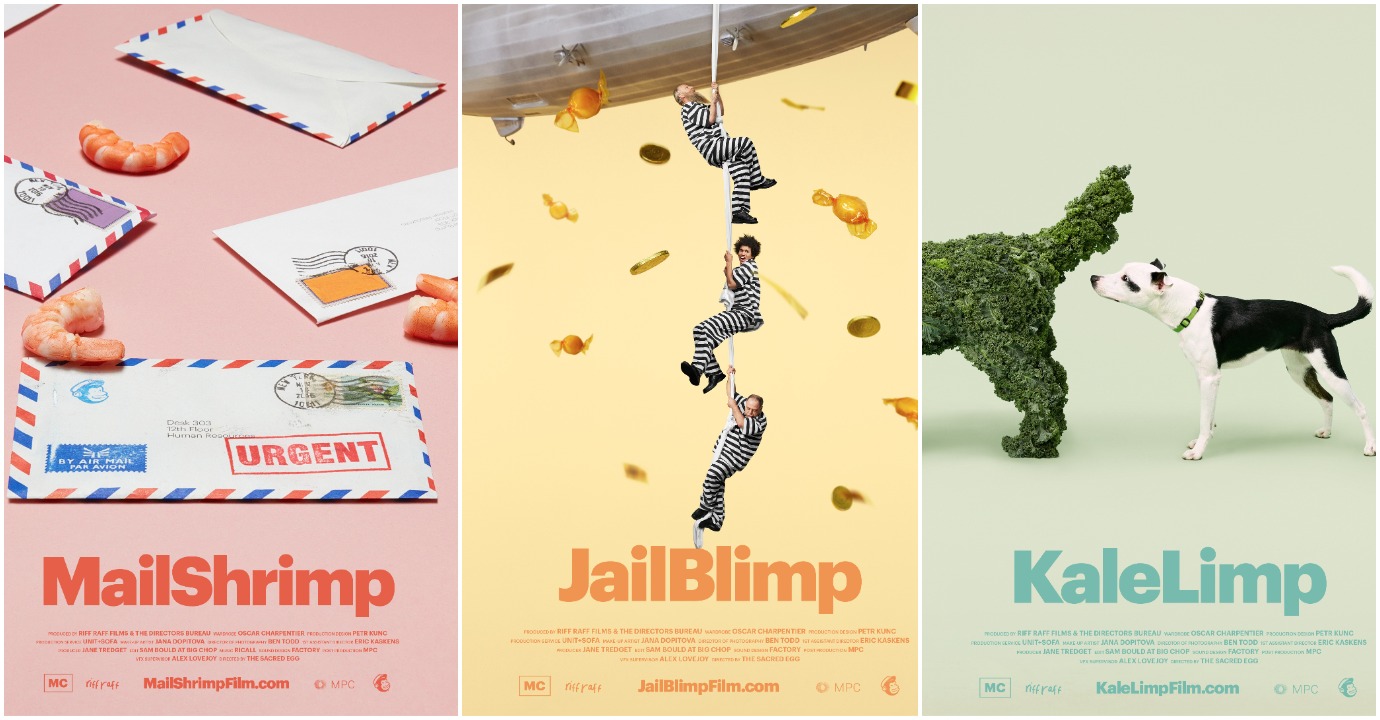
MailChimp’s first major advertising campaign, “Did You Mean…?” fits the bill perfectly. With a series of strange and surreal short films created by Droga5, the company riffs off its popular radio spot, in which a girl famously (thanks to the podcast “Serial”) mispronounces its name.
“They lead with color, using a delightfully jarring palette that feels a bit unnatural and otherworldly,” says Grossman. “And the whimsical visuals of the dogs made of kale paired with their silly wordplay tells us that this is a brand that is all about supporting creativity and free-spiritedness.”
The posters and companion clips make no attempt to correct or mention the actual brand; instead, the campaign is pure absurdity, from start to finish. 
Tip: Dark moments call for happy reminders; gloomy times call for jokes. Make sure your content adds to the light. Whether it’s a silly still life, goofy illustration, or some bizarre juxtaposition, the world could use a little laughter right now. Why not be the one to bring it?

Monday, December 7, 2015

16 Captivating Data Visualization Examples


Written by Ross Crooks | @
data-visualization-examples
Data can be very powerful. If you can actually understand what it's telling you, that is.
It's not easy to get clear takeaways by looking at a slew of numbers and stats. You've got to have the data presented in a logical, easy-to-understand way.
Enter data visualization. The human brain processes visual information better than it processes text -- so using charts, graphs, and design elements, data visualization can help you explain trends and stats much more easily.
But not all data visualization is created equal. (Just check out “Why Most People’s Charts and Graphs Look Like Crap” to see what I mean.)
So, how do organize data in a way that's both compelling and easy to digest? Get inspired by the following 16 examples of data visualization that communicate interesting information with both style and substance.

Click here to download our free guide to data visualization for more examples and tips. 

What is Data Visualization?

Data visualization refers to representing data in a visual context, like a chart or a map, to help people understand the significance of that data.
Whereas data in text form can be really confusing (not to mention bland), data represented in a visual format helps people extract meaning from that data much more quickly and easily. You can expose patterns, trends, and correlations that may otherwise go undetected.
Data visualization can be static or interactive. For centuries, people have been using static data visualization like charts and maps. Interactive data visualization is a little bit newer: It lets people drill down into the dirty details of these charts and graphs using their computers and mobile devices, and then interactively change which data they see and how it's processed.
Ready to feel inspired? Let's take a look at some great examples of interactive and static data visualization.

Examples of Interactive Data Visualization 

1) Why Buses Bunch

Here's a wonderful example of a complex data set boiled down into what that looks and feels like a game. In this visualization, the folks at Setosa are showing how "bus bunching" happens, i.e. when a bus gets delayed and later causes multiple buses to arrive at a single stop at the same time.
Telling this story in numbers alone would be pretty difficult, but instead, they turn it into an interactive game. While the buses rotate along a route, we can click and hold a button to delay a bus. Then, all we have to do is watch to see how even a short delay causes the buses to bunch together after a time.
why-buses-bunch.png

2) Languages in the World

This interactive by DensityDesign does an impressive job of introducing the non-linguist (aka most of us) to the many world languages. All 2,678 of them.
This piece allows you to explore common languages families, see which languages are most spoken, and view where languages are spoken around the world. This is great visual storytelling: taking an in-depth subject and breaking it down in an easy-to-understand way. 
languages-in-the-world.png

3) Percent of U.S. Population by Age Group

This is a strong example of how to present a single data set in a compelling way. Pew Research created this animated GIF composite to show shifts in population demographics over time. It’s a great way to tell a larger story in a neat package.
Plus, this type of micro-content is easy to share on social or embed in blogs, extending the content’s reach. If you want to make a GIF of your own using Photoshop, here's a step-by-step tutorial.

Tuesday, August 4, 2015

Eye-Popping 3D GIFs, Created With A Simple Visual Trick


Subscribe to DesignTAXI 
 
 
Like us on Facebook


These eye-popping 3D GIFs are not your ordinary animated images. Created by adding vertical lines to moving images, an amazing 3D effect is created.

Check some of them out below, or head over to My Modern Met to view more.


[via My Modern Met]


Read more: http://designtaxi.com/news/363806/Eye-Popping-3D-GIFs-Created-With-A-Simple-Visual-Trick/#ixzz3hr1jS8Lj

Sunday, November 30, 2014

Visual listening is the next big thing in social. Here’s why.

Visual listening is the next big thing in social. Here’s why.

November 29, 2014 12:41 PM
Will McInnes, Brandwatch

The human brain can process images in as little as 13 milliseconds, according to research from MIT released this year. That’s a hell of a lot faster than earlier studies, which suggested it takes 100 milliseconds. Visuals are just easier to consume: fact.

This is no secret to marketers. It’s the reason images have always been a huge mainstay in advertising, as well as the driving force behind the tidal wave of photos and image-based content shared on social networks — as many as 500 million per day, according to last year’s Internet trends report from Mary Meeker.

Images have surpassed text as the currency of choice in social conversations. Just look at the growth of image-based social networks like Instagram, Pinterest, SnapChat, Vine, and Tumblr. Twitter and Facebook encourage the use of images too because, as socially savvy people know, posts with an image get more views and shares.

Brands are actually using Instagram as a mainstream advertising platform as well. In fact, some of the biggest consumer brands in the world now count Instagram as one of their three or four core social platforms along with Facebook, YouTube, and Twitter. Looking ahead, as brands experiment with virtual reality innovations like Oculus Rift and Google Glass, you can expect new kinds of visual experiences that will look and feel quite different — immersive and multi-sensory.

Today there are a handful of standalone listening and analytics tools for networks like Pinterest but, on the whole, today’s social media listening and measurement platforms are built for a textual world, with limited abilities to fully register the nuances of visuals. This means there’s an enormous chunk of visual Web content that is not being fully “heard.”

Here are six reasons why we can expect visual listening to become a top priority for savvy brands in 2015:

1) Following the money.
Brands rely on campaigns targeting bloggers and influencers to organically build buzz among followers on image-based social networks, and it’s a tactic that works incredibly well. But now, Pinterest and Instagram are introducing advertising with the goal of dramatically monetizing their currently-bare bottom lines. There are several recent reports that show Pinterest is pricing CPMs at $30-40 and that Instagram’s CPMs will also be on the high-end, with month-long campaigns starting at $350,000 and up. In 2015, you can expect to see major brands diverting advertising spends from traditional channels like TV into image-based social networks to up their game and stand apart from the competition. After all, glossy and gorgeous imagery is easily transferred to digital and social campaigns. Where there’s money spent, there is always the need for analytics and measurement in order to optimize and prove ROI.

2) Brand protection
Brands have enormous vested interest in knowing where and how their images are being used and shared – deliberately or otherwise — and to glean insights about people’s relationships with, and reactions to, their content. Equally important, visual listening will help brands ensure that other parties are not misusing their images.

3) Serendipitous insights
Visual listening will open up a world of insights and new business opportunities by discovering more about the moments in which branded images are used in relation to other images, content, and social markers. Using visual listening, you’ll be able to spot patterns and correlations that could lead to serendipitous discoveries, fuel new under-the-surface campaigns, reveal untapped audiences and stimulate product development ideas. For example, imagine the type of campaigns a sneaker brand can create after discovering that consumers are frequently sharing photos of their latest kicks while drinking coffee at Starbucks.

4) Tech innovation
Data science has come a long way. I believe that in 2015 the industry will innovate to make it possible to train a computer to recognize the difference between an image of a dog and a cat. It could even be sophisticated and powerful enough to discern a highly nuanced brand signal, like the crown within the Starbucks logo or the leaf at the top of Apple’s logo. Word on the street is that Facebook is already using some pretty advanced image recognition technology to identify faces in photos and images posted. These kinds of leaps in technology will unleash the potential and sophistication of visual listening.

5) Emotions front and center
Emojis, emoticons, and stickers are an integral part of our social vernacular as well as everyday conversations on text and chat. Earlier this year, the Unicode Consortium introduced approximately 250 brand new “pictographic symbols,” including such recognizable additions as the middle finger and the Vulcan salute. In 2015, more racially diverse emojis will be released. Since emojis are technically code, not images, they can today be measured through standard textual tools but for brands, the visual listening (and learning) opportunity lies in understanding how emojis are used contextually, alongside their logos and images.

6) Command centers as real-time visual listening sources
As the social environment matures in 2015, I anticipate that command centers will spread as a mainstream business tool. By tapping into unified views of textual and visual listening in a totally engaging way, marketers will create a compelling source of social intelligence and action.

***
How far off is this fantastic future of visual listening? Not that far! Today there are a few standalone solutions but the true future – and power – of visual listening will happen when it will be possible to mesh textual and visual social listening together. I see this coming to reality within the next six to eight months. Just imagine if we could add audio to this mix and create truly multi-sensory — even immersive — social listening. Now that’s something to watch out for.