Showing posts with label SocialSkim. Show all posts

Monday, February 26, 2018

#SocialSkim: Facebook 3D Posts Are Coming; LinkedIn Salary Insights

This week's 'Skim: Why Facebook's new 3D posts open the door to a brave new augmented and virtual reality world; all about LinkedIn's new Salary Insights; Facebook opens Community Help feature to businesses, takes big privacy hit in Belgian court; Snapchat ads GIFs, plans new tab feature; the important new Facebook engagement metrics your brand needs to focus on; how to take advantage of Instagram Stories for business; and much more...
Skim for a week's worth of social know-how!
1. Introducing Facebook's next big thing: 3D posts
What's more engaging than a 360-degree photo and combines augmented reality, virtual reality, and Facebook's News Feed? Interactive 3D model posts. The social network is polishing up a new way for users to share natively, and it could provide brands with the opportunity to test loads of new, engaging content.
Users can already drag and drop 3D files (industry standard .glTF 2.0) to the social platform, and those using Facebook Spaces—the social network's VR hangout rooms—can bring them right with them. It's a natural progression from text to photo and video, and now to more immersive types of media on the platform. Users could well end up buying and selling branded objects to play around with in their VR or AR worlds.

Click Here!
Want a customized chess piece to bring into your VR game? Bespoke jewelry and clothes to deck your future Facebook Spaces avatar with? It's coming.
2. LinkedIn to roll out Salary Insights for users
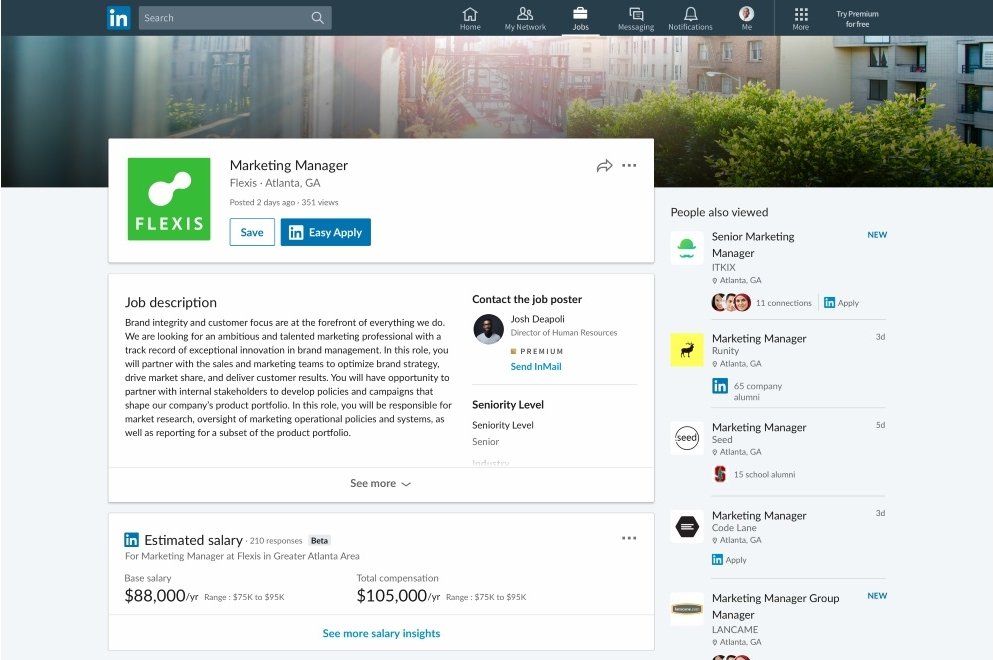
LinkedIn is set to introduce Salary Insights to members who give estimated or expected compensation ranges for vacant positions listed on the professional social network. The data will be based either on figures submitted by employers themselves or on data collected from other users.
For users it's a big bonus they've probably desired for a while now, enabling them to either walk into interviews armed with new figures or to skip over positions that don't meet their salary requirements. For recruiters, it could mean the days of low-balling candidates could come to an end.
3. Facebook opening Community Help feature to businesses
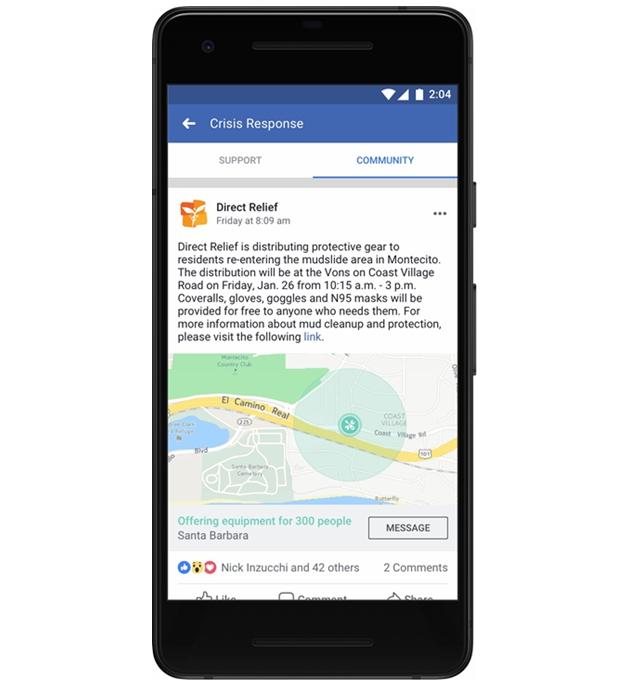
One year after its launch of Community Help, Facebook is set to expand use of the feature to organizations and businesses, starting with a few key partners. Community Help, which lets users find and provide help to those in need in the wake of catastrophes (natural disasters, terror attacks, and more) was integrated into the social network's Safety Check feature in February 2017.
Inclusion of businesses and organizations means brands can now take part in assisting the community in more ways than one—providing products and services to those in times of need, connecting volunteers between organizations, and more.
The move should expand use of the tool, which has accounted for 750,000 posts since its introduction last year, and provide businesses with new ways to build better relationships with their immediate communities and incorporate corporate social responsibility (CSR) into the social sphere.
4. Snapchat introduces GIF stickers via Giphy, new tabs feature
Users can now add GIFs to their snaps and stories with a simple tap and scan of Giphy's library, which has been integrated into the social messaging platform. The GIFs live alongside Snapchat's own new animated stickers, which can also be moved around and resized at will.
A second new feature coming soon to iOS users, and later to Android devices, is a tabs feature that will let users filter or sort through their friends with active stories, group chats, and their subscriptions in Discover.
That could address many users' complaints about stories' being mixed in with the entirety of their friends' snaps in the app's new redesign, and also provide a new way to organize, make the platform more user friendly, and increase discoverability.
5. How marketers can take advantage of Instagram Stories
Instagram's copy of Snapchat Stories launched in August of 2016, caught on like the plague, and by November 2017 reached over 300 million daily users.
With that growth has come new opportunity and greater ephemeral reach, so how can brands take advantage of the format in a way that gets them closer to achieving their social media marketing objectives? Adweek's Social Pro Daily has what you need to get started.
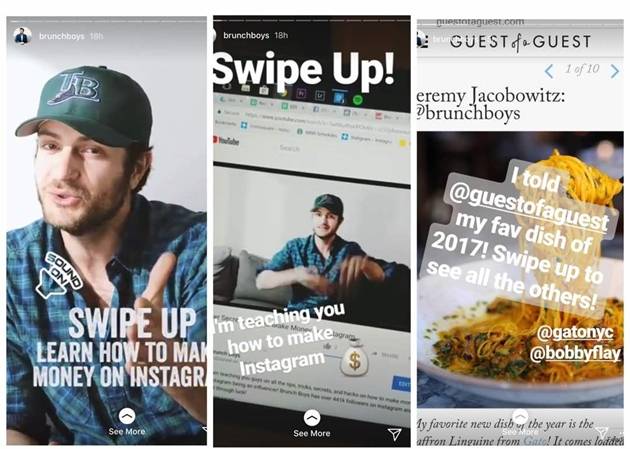
Covered in detail: taking advantage of the polls feature, using links to generate traffic and leads, mastering the art of Story storytelling, amplifying CTAs with overlay text, using Story ads, and more.
6. Likes are so yesterday... New Facebook metrics you should pay attention to
Facebook recently held a publisher-only webinar, and the message was clear: Garnering likes and posting often are no longer the gold standard for Facebook's algorithm. Instead, brands will need to focus their content on generating new types of interaction—shares. And not just shares of a post, but link shares within Messenger, around the Web, on WhatsApp.
Facebook will increasingly promote content that's making rounds on its ecosystem and generating loads of comments. These meaningful interactions are taking over what we used to know as the valuable metrics to track, and brands need to prepare.
Whether that means getting involved in WhatsApp Groups or focusing on understanding what makes content ultra-shareable, the uphill battle starts now.
7. Instagram outdoes Snapchat with new feature, adds new user control to Direct Messages
Instagrammers can now decide how long they want photos and videos they send via Direct Messages to remain visible to recipients. The move gives Instagram's direct, ephemeral messaging feature—original to Snapchat—an added layer of customizability Snapchat doesn't yet have.
Instagram users can select from making their content sent via private messages available for viewing just once, looped so viewers can get an additional glance before it's gone forever, or "kept in chat" so their friends can refer to the content in thumbnail format in the conversation forever.
All that means Instagram's messaging functionality just got more interesting, and it will probably attract even more users.
8. How to use Instagram hashtags to build awareness and increase exposure
The Instagram hashtag game just isn't what it was in 2015, so brands need to be aware of the new possibilities and tools at their disposal to maximize their reach, build their follower base, and increase exposure.
Since the social network introduced a way for users to follow hashtags like they can other users, employing the right ones has become even more crucial in getting into the feeds of your target audience.
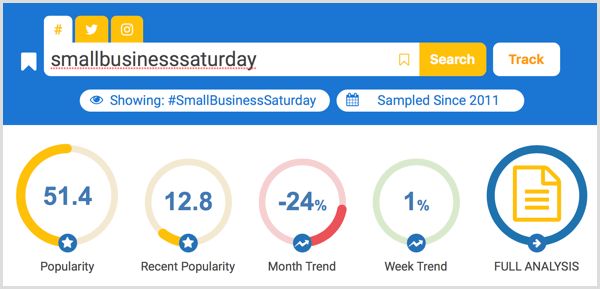
From using the right location-based hashtags to build on local awareness, to co-opting fun or untraditional hashtags to garner more immediate visibility, to creating a branded hashtag campaign and monitoring the effectiveness and popularity of hashtags, some top tips from Social Media Examiner help you maximize engagement on Instagram and so get you one step closer to achieving your social media marketing goals.
9. Facebook hits new privacy brick wall in Europe, told to stop tracking Belgian users
Facebook was dealt another big privacy blow—this time under Belgian jurisdiction—for tracking users habits online even when said users are not on the social network. In fact, a Belgian court said the social network must quit tracking Belgian citizens, and delete all data it holds on them, or risk paying a €100 million fine.
The judge seemed to find particular issue with the fact that Facebook can, without the knowledge of its nonusers, track their movement on the Web without those users' ever having even visited the Facebook website.

Though Europe certainly tends to have tighter restrictions on privacy than the US, the advent of fake news and increasing scrutiny on online identities could see similar questions and restrictions being raised on this side of the Atlantic.

Tuesday, February 20, 2018

#SocialSkim: Facebook 'Dislike' Button; Twitter Makes a Profit

This week's 'Skim: Why and how Facebook is testing its first "dislike" button of sorts; what drove Twitter to its first profitable quarter ever; why your Facebook Page will begin showing much lower organic reach as of this week; Snapchat paves the path to wider sharing and media use with the launch of the embeddable Snap Map; what platforms are outpacing Facebook's growth among youth; Snapchat finally gives creators detailed analytics; and much more...
Skim for your weekly roundup!
1. Facebook might (kind of) let users 'dislike' content
Facebook this week took perhaps its closest step yet to creating a button that allows users to express their discontent on the social network. By trailing what it calls a "downvote" button, the social giant could give users the ability to flag and hide comments on posts (not the posts themselves) made on public pages.
Currently available only to a small subset of US users, the feature provides options to report a comment as "offensive," "misleading," or "off-topic," and then hides the associated content.

Click Here!
Users have been clamoring for a way to show their disapproval of content on the social network, but so far Facebook hasn't given in. With the social network's goal of bringing the community closer together, this potential new downvote button is likely as close as users will ever get.
2. Twitter makes a profit for the first time ever
For the first time in its 12 years of existence, Twitter recorded a profitable quarter, reporting profits of $91 million in Q4. The reversal was largely due to the social network's focus on and investment in adtech that provided better targeting and measurement results for advertisers.
Although it recorded slightly less revenue in 2017 than in 2016, Twitter also learned how to cut its net losses by a few hundred million, and its expansion of the character limit from 140 characters to 280 for users resulted in an engagement spike.
Could 2018 be the year of the Twitter renaissance?
3. Facebook redefines how it measures your organic reach, and it will affect you
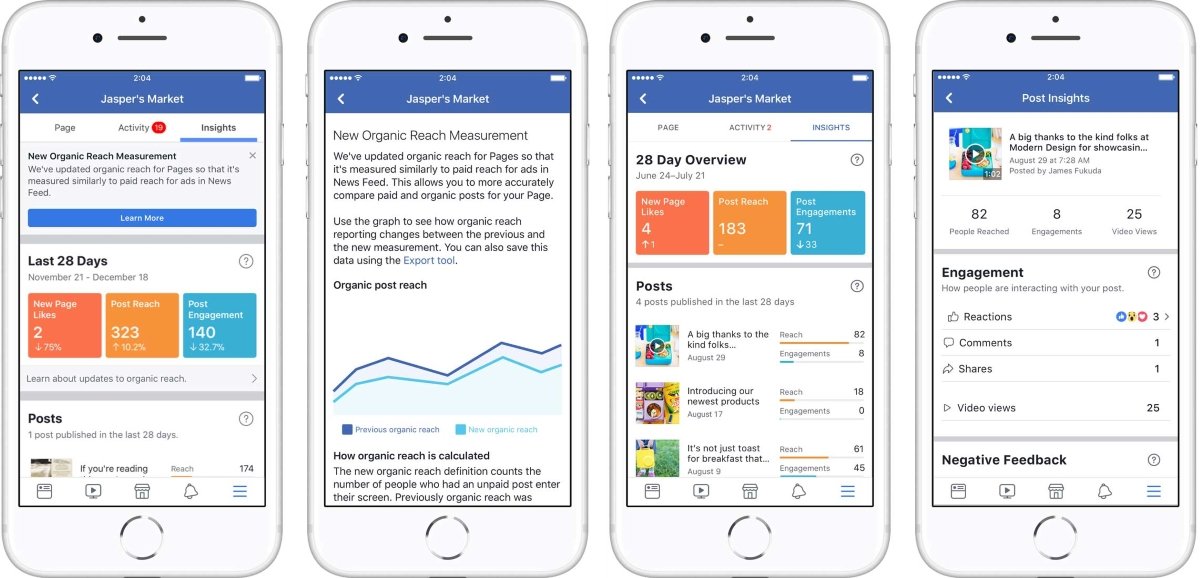
Starting this week, many pages and brands will notice plummeting organic reach numbers on Facebook, but it's not because the content you're producing suddenly stopped working.
In what's been a long wait since its announcement, the social network this week redesigned Insights and finally implemented a big change in how it measures the organic reach your posts have.
Rather than counting every time your post populates within the News Feed of a user as a person reached, Facebook will now consider only the number of times a post has visibly entered a user's screen.
Brands will be able to view their old reach equivalents right next to the new ones within Facebook's Insights tool for the next few months. That should make the transition and acceptance of yet another Facebook overhaul slightly easier to swallow.
4. Snapchat brings its Snap Map to the Web, with embeddable format
Snapchat's eyeing some new, hyper-shareable territory for its Snap Map product, a recent addition to the app that lets users view a map of the globe and, within it, public snaps based on geolocation. Now, the feature is headed to the World Wide Web.
Though Snap Map on the app also lets users see where their friends have logged into the app recently (assuming they've enabled sharing), the Web version of Snap Map is less focused on friends and more on media companies. Snapchat's hope seems to be that news organizations and the like will use the feature as an interactive map to share real-time content.
It's a new use case for the social network and one that could hold a lot of promise. Check out a sample below.

5. Facebook losing young users to Snapchat
A new study from eMarketer doesn't bode well for Facebook's growth among perhaps the most important demographic: youth. Less than half of Internet users age 12-17 in the US will use Facebook for the first time, and the social network will lose 2 million users under the age of 25 this year, the research shows.
By comparison, Snapchat is predicted to gain 1.9 million users in the same age group. Even with growth within the same demographic on Instagram, which is perhaps Facebook's most attractive platform for young users, Snapchat is still expected to take the cake.
Facebook will certainly continue acquiring and replicating features that make platforms like Snapchat a hit among our youngest social media users, but will it be fast enough?
6. YouTube to remove advertising from harmful channels, decrease discoverability
Google's YouTube has unveiled a set of more stringent sanctions it will levy against creators and channels that the company deems harmful to viewers, others in YouTube's community, or advertisers. More precisely, aside from removing the ability to earn revenue from advertising, which it has done in the past, YouTube will now downgrade a channel's discoverability across the platform.
That means the sanctioned channel might no longer be eligible for recommendation on the social network, and so its content will not appear on YouTube's homepage, its trending tab, or its watch next section. That's significant, because discoverability is paramount to a channel's success; and so, YouTube's latest shift in policy could be its most significant yet in its fight against abuse on the platform.
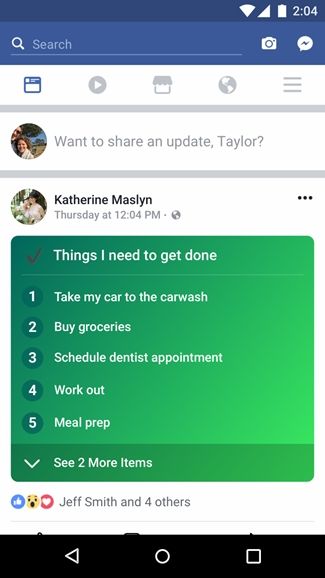
7. Introducing Facebook Lists, the first new feature for status updates in almost a year
Facebook is vying for users to share more personal parts of their lives via the status update box, a tool that's mostly been used in recent years to fill news feeds with GIFs, memes, videos, links, and... ads. The new Lists feature encourages users to create their own lists using colored backgrounds, decorate them with emoji, and share them with their friends.
With postings of personal content decreasing significantly in the past few years, Lists, which will live in users' status updates box alongside polls, feeling/activity, photo/video, and check-in, could play a crucial role for Facebook to engage its community and live up to its promise to prioritize content from friends and family over that of publishers.
But don't think this one's lost on you, brands, because we're sure you could think of a way or two to make Lists work for you!
8. Snapchat finally gives creators analytics
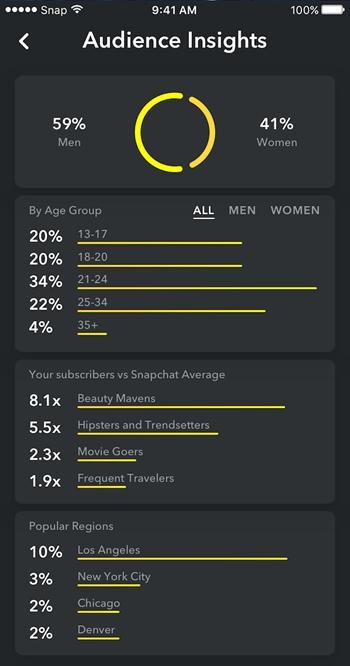
Snapchat just became a whole lot more useful for verified brands, users with official Stories, and users who have significant followings. The social messaging platform launched audience insights for tens of thousands of such users, who will now have access to in-depth demographic data and view counts.
Those users will be able to see the number of views a story attracted over a specific time frame, the length of time viewers spent on content, and a breakdown of viewers by location, gender, age, and interest.
Long overdue, and surely welcomed.
9. Google's AMP Stories launches, gives Snapchat Discover a run for its money
Google introduced AMP Stories in a format familiar to those who know Snapchat Discover, a sort of mobile, interactive magazine layout heavy on visuals and graphics, and used mostly by news organizations and publishers to serve their content creatively to Snapchat users.
Now, Google's AMP Stories has launched, which means Snapchat is no longer the only place for brands and publishers to push similar content. AMP Stories will show up in Google's mobile search results. Creators can also embed them on their websites, possibly giving publishers far more reach—if the search giant prioritizes them in search results—than they could have achieved on Snapchat.
It seems Snapchat's Story format isn't the only unique type of content that brands everywhere want to copy.
10. We'll wrap with Facebook's pledge to give $10 million to community leaders
As a part of his effort to make the world more open and connected, Mark Zuckerberg laid out a new community-centric plan this week with the announcement that Facebook would award five $1 million grants to community leaders who are using Facebook, WhatsApp, Instagram, or Messenger to bring people closer together.
As part of the initiative, the social network will invite 100 people to join a fellowship program that includes training and mentorship, as well as up to $50,000 for specific initiatives.

The endeavor marks another step Facebook is taking to refocus its energy and put family and friends, rather than media companies and other publishers, at the forefront of the platform.

Monday, February 5, 2018

#SocialSkim: Facebook Loses Users for First Time Ever; Twitter Preps Snapchat Feature

This week's 'Skim: how and why Facebook voluntarily lost users for the first time ever; all we know about Twitter's new Snapchat-like video feature; Instagram is set to finally let businesses schedule posts, and it's possibly launching a video-calling future; why Facebook and Google are fighting over local news; why an appeals court swiped left on Tinder for age discrimination; how to use Facebook Lead Ads to generate more leads; WhatsApp hits a massive new milestone; and much more...
Skim to save more time!
1. Facebook looks after the well-being of its users, even if its 'sacrifices' mean users leave
Over the last quarter, Facebook has made a series of serious changes to its algorithm. The reason? To prioritize the well-being of its users, discourage passive consumption of content, and better the role the platform plays in society, Facebook said.
That meant not only reducing the pace at which viral videos spread across news feeds but also prioritizing posts by friends and family above those of brands. The results? Time spent overall on Facebook has decreased 5% (50 million hours per day) and, for the first time ever in any of its markets, the social giant lost daily active users in the US and Canada—to the tune of nearly 1 million.

Despite all that, Facebook recorded a 47% ad revenue increase for the financial year. Suddenly we don't feel so bad for its "sacrifice."
2. Twitter's prepping a Snapchat-like video sharing feature. Here's what we know.
Details are few and far between, but Twitter appears ready to find new ways to engage users and get them sharing video more quickly and easily with a new feature. According to those familiar with the project, the social network looks to reduce the time and number of steps required for users to share video and photo on the platform, a feat that's currently quite cumbersome.
Unlike Snapchat, which opens directly to a camera screen, Twitter users have to open the app, click the compose button, navigate to the camera button, take a video or photo, and then select the tweet button to share.
Some analysts think a new video feature could lure active users into using the platform more frequently, but not necessarily translate into the user base growth the social network needs.
3. Instagram will now let brands schedule organic posts, but what's the catch?
A long-awaited and, frankly, overdue feature has finally made its way to Facebook's Instagram: post scheduling. Over are the days of employing a third-party tool to send push notifications to social media managers as reminders for them to post at a specific time.
But Instagram also isn't integrating the scheduling feature directly within the Instagram app itself.
That's right, the social network is supporting the new capability only from within its API, so it'll still be up to external solutions like Hootsuite and Sprout Social to bring the scheduling feature into their products so social media teams can take advantage of them.
If your social strategy calls for dabbling heavily in Instagram, but you haven't already, it might just be time to look into a social media scheduling tool.
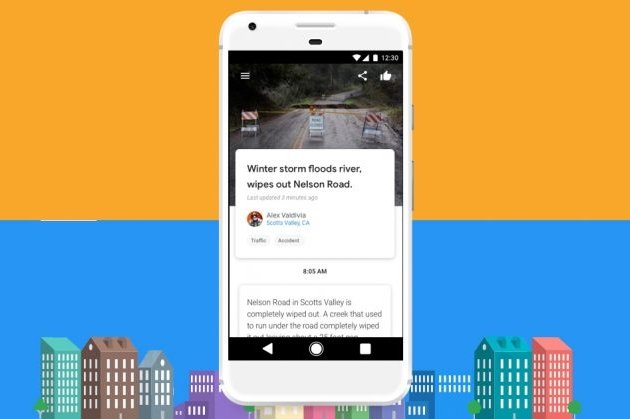
4. Google experiments with local news with new app, Bulletin
CNN has its app, as do most local news stations, but Google thinks there's a gap in the market for a hub that lets users post quickly about hyper-local news and events—from road closures and high school sporting events to bookstore readings and municipal meetings.
Bulletin, a new Google app in testing in Oakland, California, and Nashville, Tennessee, looks to provide just that—a place for users to post quickly about breaking news in their area.
Twitter might already seem to have a hold on that space, but Google's unrivaled monopoly in search could give the tech giant reach Twitter just can't compete with.
Are you in Oakland or Memphis and want to give Bulletin a spin? You can sign up here.
5. Facebook takes on Twitch with new gamers program
The social giant all but screamed the name of its next targets in its continued effort to usurp the functionality of all social platforms when it announced its new "gaming creator pilot program" this week.
Facebook looks set to challenge Amazon's Twitch and Google's YouTube in an ecosystem it hasn't yet fully explored, but which has the potential to court a segment of highly engaged users. Like Twitch and YouTube, Facebook's new space will serve as a hub for gamers to stream live video and let them earn tips for it, too.
What does Facebook have going for it? Gamers can stream in a higher quality than most traditional feeds, it boasts a 2-billion-person user base. Oh, and it also owns virtual reality company Oculus.
6. Leaked Instagram image suggests a video-calling feature on the horizon
Instagram appears ready to leap into an arena most probably didn't think it would—or at least not so soon. A leaked image of an unreleased version of the app appears to show a video-calling feature, much like the one on Facebook Messenger or WhatsApp, and it could indicate a drastic shift in strategy for the company.
Instagram has recently made several improvements to its direct-messaging feature, but the introduction of video-calling would position the social network as a full-fledged communications platform.
Instagram hasn't commented on the image, and there's a chance the it may never see the light of day... But, honestly, does it not make sense for the Facebook owned service to at least try its hand?
7. Facebook to put local back in the news feed
Google's not the only tech giant that seems to have discovered a reason to actively promote more local news to its users. Facebook this week announced it would start prioritizing local news sourcesand stories in users feeds, citing findings from a cross-country trip, during which Americans suggest that focusing on concrete, local issues could help stem the tide of negativity and division.
The thinking is that national outlets often focus on highly divisive issues, and so the new Facebook algorithm adjustment will push news stories clicked on by users in small geographic locations.
Facebook is expected to roll out the change in the US first, with international markets possibly coming as tweaks are made.
8. It turns out even social networks can't discriminate based on age
And Tinder just learned that the hard way. A California appeals court this week ruled the social dating platform has indeed implemented a discriminatory pricing strategy, which charges users under 30 only $9.99 per month for the premium service, whereas users 30 and above have to fork up $19.99.
Although Tinder originally defended its position as a way to entice younger users who likely have more budget constraints, the appeals court sided with the plaintiff, and the practice was deemed discriminatory.
The court's decision to overturn a previous trial court's decision in favor of Tinder concluded with "accordingly, we swipe left, and reverse." Shots fired.
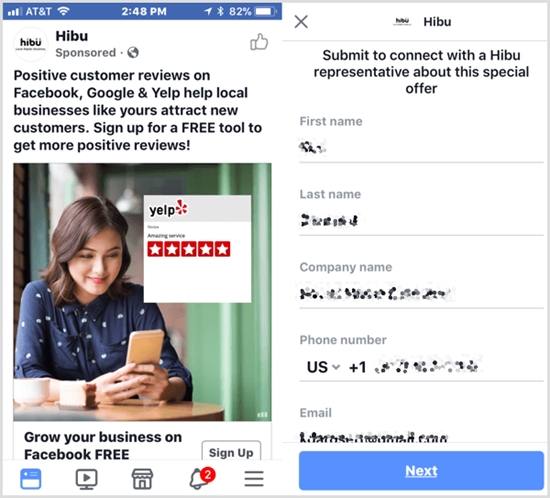
9. How to use Facebook Lead Ads to find more prospects
Facebook Lead Ads are different from most other formats on the platform in that they provide a space for users to leave their contact information if they're interested in your product or service. And though many B2B brands are wary of Facebook's efficacy in delivering quality leads, social media managers should remember that employees who are on your radar are, most likely, also on Facebook.
How do Facebook Lead Ads work differently from others, and what kind of offers can your lead ad promote? What information should you require to build quality leads, and how do you actually build a Lead Ad? From answers to those questions to how to download your captured data post-campaign, Social Media Examiner has it broken down to a science.
10. WhatsApp hits 1.5 billion monthly users, Facebook says 'I told you so'
Facebook purchased WhatsApp for $19 billion in 2014, when the social messaging platform already counted 450 million monthly active users among its ranks. Now, with 1.5 billion users, it seems what some thought as an outrageous price to pay suddenly appears more digestible.
Even more impressive? Both Instagram's Stories and WhatsApp's own story-format feature boast 300 million users each, whereas Snapchat can claim only 178 million total.
Now that WhatsApp's attained such a following, Facebook's next move is surely, undoubtedly, to monetize them. Here we go.
11. We'll wrap with the tiny 'rat' taking a 'shower' that became a social media sensation
This week's social media sensation, courtesy of a Reddit user in Peru, was what appeared to most to be an adorably tiny rat taking a tiny shower like a tiny human. But, by the end of the week (and hundreds of thousands of views later), news broke that the adorable creature was most likely not a rat at all, and that it was also probably in distress.

It turns out the animal is a pacarana, a large rodent indigenous to South America, and it was likely in a rush to rid itself of soap that was probably smothered on it by a human. According to experts, the movement signals distress, which means this viral animal video suddenly became a lot less fun than most.