Thursday, May 23, 2019

StoryBrand Website Examples

StoryBrand Website Examples

But somewhere along the line, whether through busyness or the complicatedness of life, you start wondering, am I doing this right?
I have felt that feeling myself. I wondered if I described my customer’s problem in such a way they identify with it. I struggled with getting my language clean and concise. I wrestled with being too “cute” or too “artsy” in my language. I was too verbose.
And, I think the biggest issue I had (and seen others have) is that I knew my product so well I started talking with ‘insider’ language — this is where everyone inside the organization knows what you are talking about because it is familiar, but others really have no idea. This is extraordinarily easy to do and a bit tricky to overcome.

When we’re not clear in our marketing or on our website, we lose revenue.

Many people are in business to improve their customer’s lives and make our world a better place — even if only in a small way. They hear talk of revenue and check out. Revenue isn’t the point for these folks. Impact is.
However, without revenue, there is no capital to invest in the world. Your impact diminishes. Many nonprofits or businesses with a social mission are forced to close their doors because they didn’t see the necessity of prioritizing revenue.
Whether your goal is to make a bunch of money or to have a meaningful impact, your marketing matters. Your message matters.
When I am trying to learn a new way of doing things, I love to see examples of people who are masters of that skill.
Just like bikes in a peloton draft off of one another, gaining speed from each other’s draft, marketers gain momentum and clarity by looking at examples of how to do it right. How to be excessively clear.

Here are six StoryBrand website examples

In this article, our goal is to emphasize the first impression, the first three seconds, and demonstrate how StoryBrand can make your website immediately clear. Find a full walkthrough of how to StoryBrand your website here.
Or click here to download a StoryBrand website template you can use to upgrade your own website.
Viewers only give you 3 seconds to tell them what you do before they decide to check out. If you’re not clear, they leave. We use something we call the “Grunt Test” to see how clear a website is. We look at the site for 3 seconds and ask these 3 questions:
  1. What do you sell?
  2. How does it make my life better?
  3. How do I buy?
The companies in these StoryBrand website examples come from a diverse population of size and type. The common element is that they are incredibly CLEAR. In a quick scan of each website, it is immediately apparent what these businesses are selling and how to buy it.
Let’s look at some StoryBrand website examples to see if they pass the Grunt Test.

StoryBrand Website Example #1: CageRat Baseball
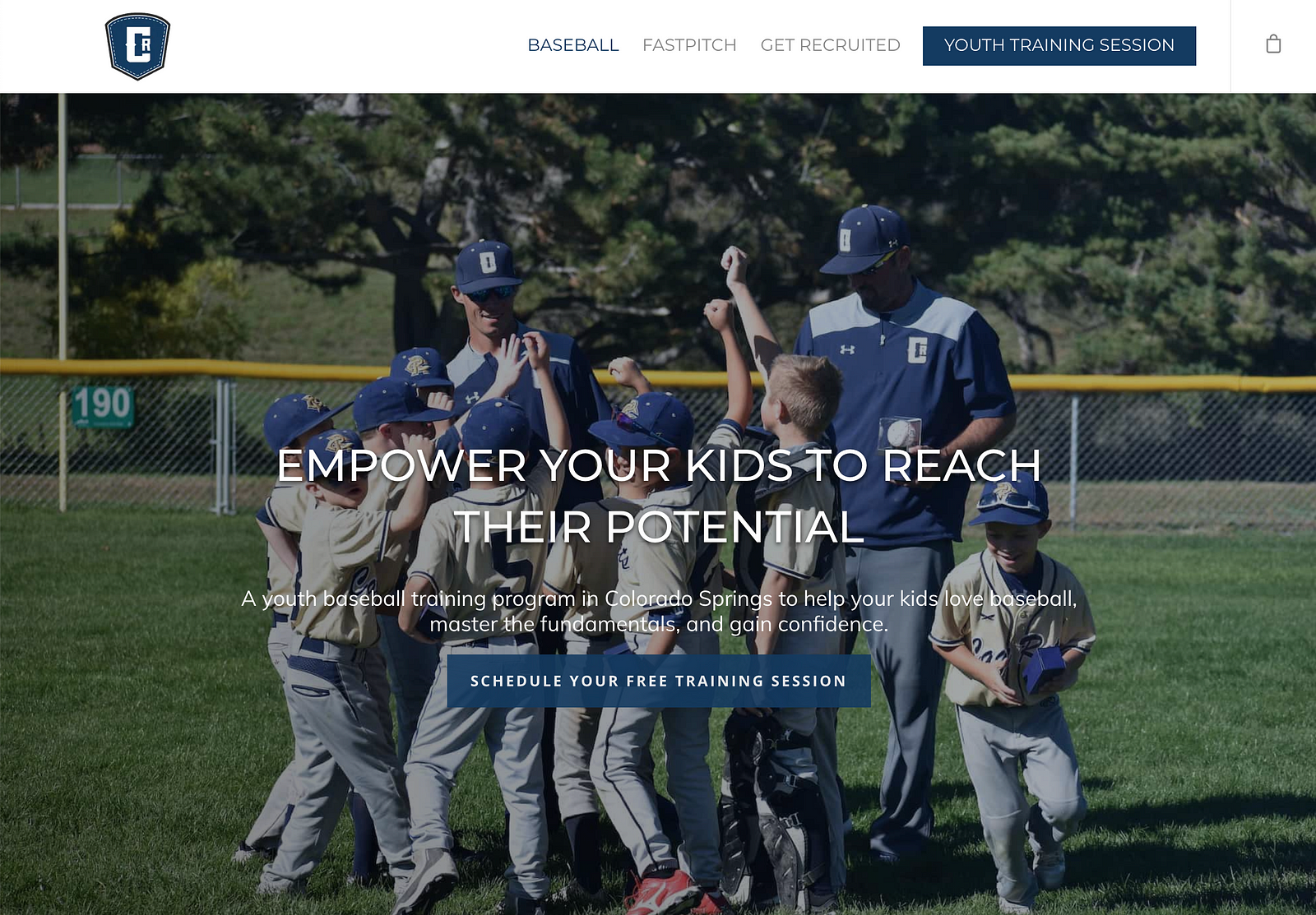
This certainly passes the test of clarity. Many websites don’t explicitly state what they’re selling. Users have to scroll all over the site and burn many mental calories to figure it out. CageRat clearly tells you what they offer. Let’s go through the Grunt Test.
  1. What do they do? It’s a youth baseball training program.
  2. How does it make your life better? It helps you empower your son to reach his potential. And, look at that picture! As a parent, I recognize what’s going on instantly. In fact, that’s exactly what I want for my son.
  3. How do you buy? There are two clearly labeled buttons.
Let’s look at another website.

StoryBrand Website Example #2: Koha Pet Food
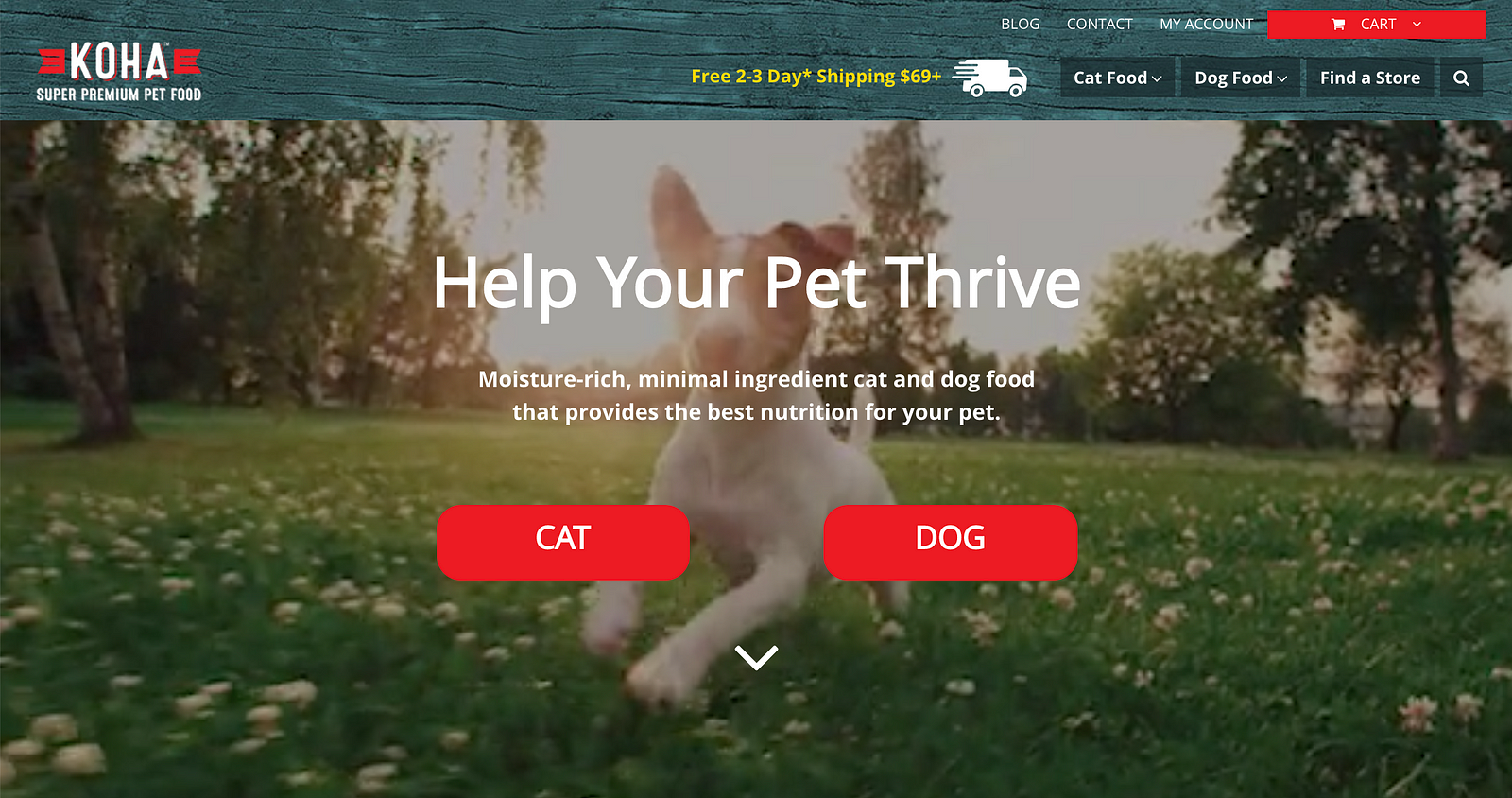
  1. What do they do? They help your pet thrive with food that provides the best nutrition for your pet. This is extraordinarily clear.
  2. How does it make your life better? Your pet is now thriving and healthy. And that picture helps me imagine how happy my dog will be when I start feeding him Koha!
  3. How do you buy? By clicking one of those big, red buttons! So good.
Their photo makes you smile as you imagine your own wonderful dog leaping and enjoying his or her life because s/he feels good. All because of good nutrition. Koha is a great example of a clear message.
In this next example, this company took clarity even further — they put it in their name.

StoryBrand Website Example #3: Perfect Venue

Notice the photo and the wording. We aren’t left guessing what these guys offer.
  1. What do they do? Help you find a venue for an event.
  2. How does it make your life better? They don’t help you find a mediocre venue, they help you find the perfect venue for your event!
  3. How do you buy? This one’s a little different, the main call to action is “Find a Venue.” There are two clear buttons for you to press to do that.
This next website example is a little different. It’s a person rather than a company.

StoryBrand Website Example #4: Judy Ingels

In this StoryBrand website example, it’s evident that even when a brand is a person all the same rules about clarity and message still apply.
  1. What does she do? She helps you get a home loan.
  2. How does it make your life better? You get to buy your dream home! And she also helps with the insecurity that comes with buying a house. If you have ever bought a home, then you know that it is a complicated process that can easily create tension and frustration.
Here is a great example of addressing both an internal and an external problem for the customer. Anxiety and frustration are strong emotions that motivate people. If your business can address my angst and also the “internal crazy”, then I am that much more willing to entertain your offer. And that makes you more money.
  1. How do you buy? Here is another example of making things very understandable to the website visitor. Notice how easy it is to find the call-to-action button. Nice job!

StoryBrand Website Example #5: Zoe Facility Services
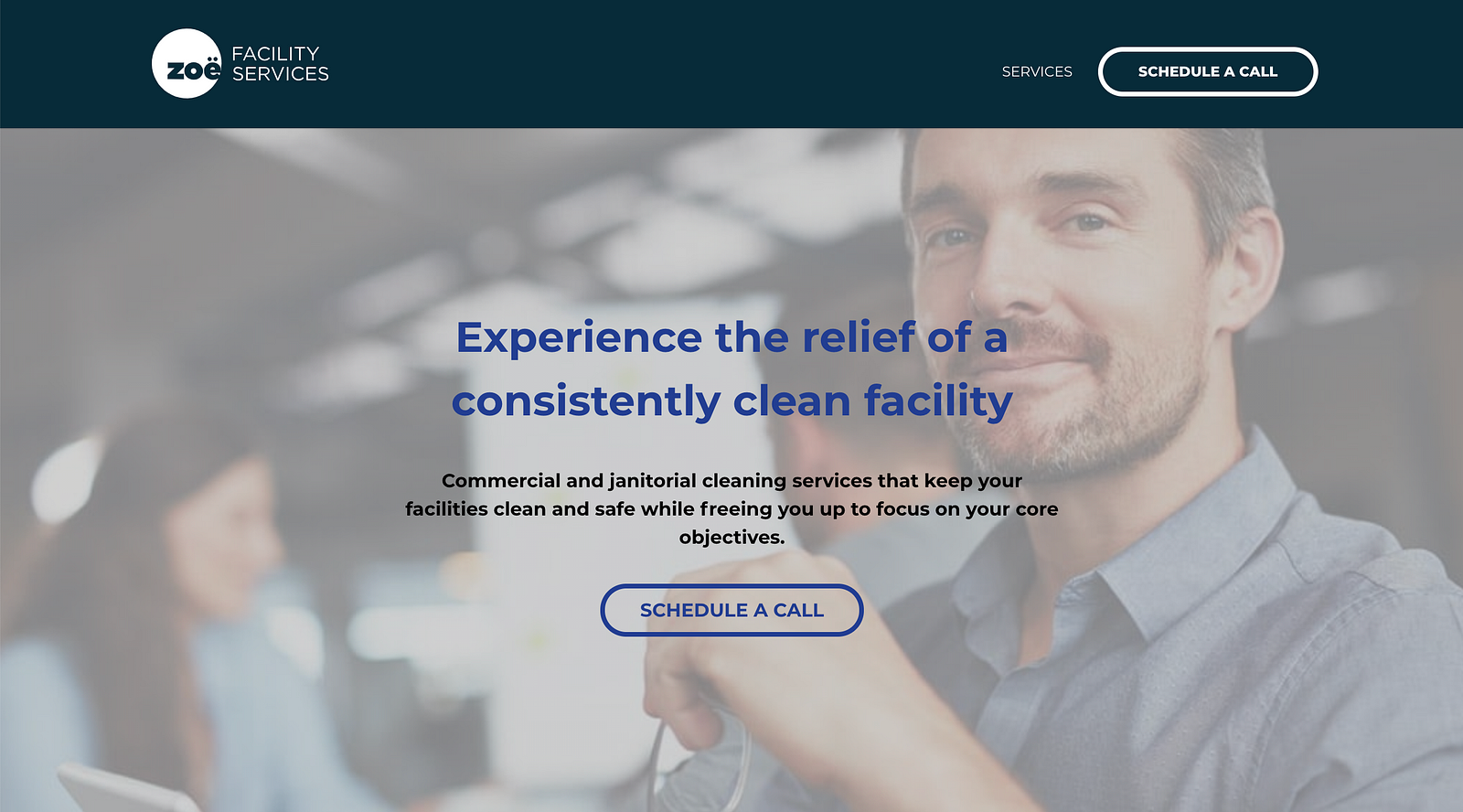
You don’t necessarily know what this business does from the name, however, the copy immediately tells you what this business is all about.
  1. What do they do? They clean your facility.
  2. How do they make your life better? You experience relief. You are free to focus on your core objectives. And your building is clean. Consistently.
  3. How do you buy? Click the “Schedule a Call” button

StoryBrand Website Example #6: Colorado Mobile Drug Testing
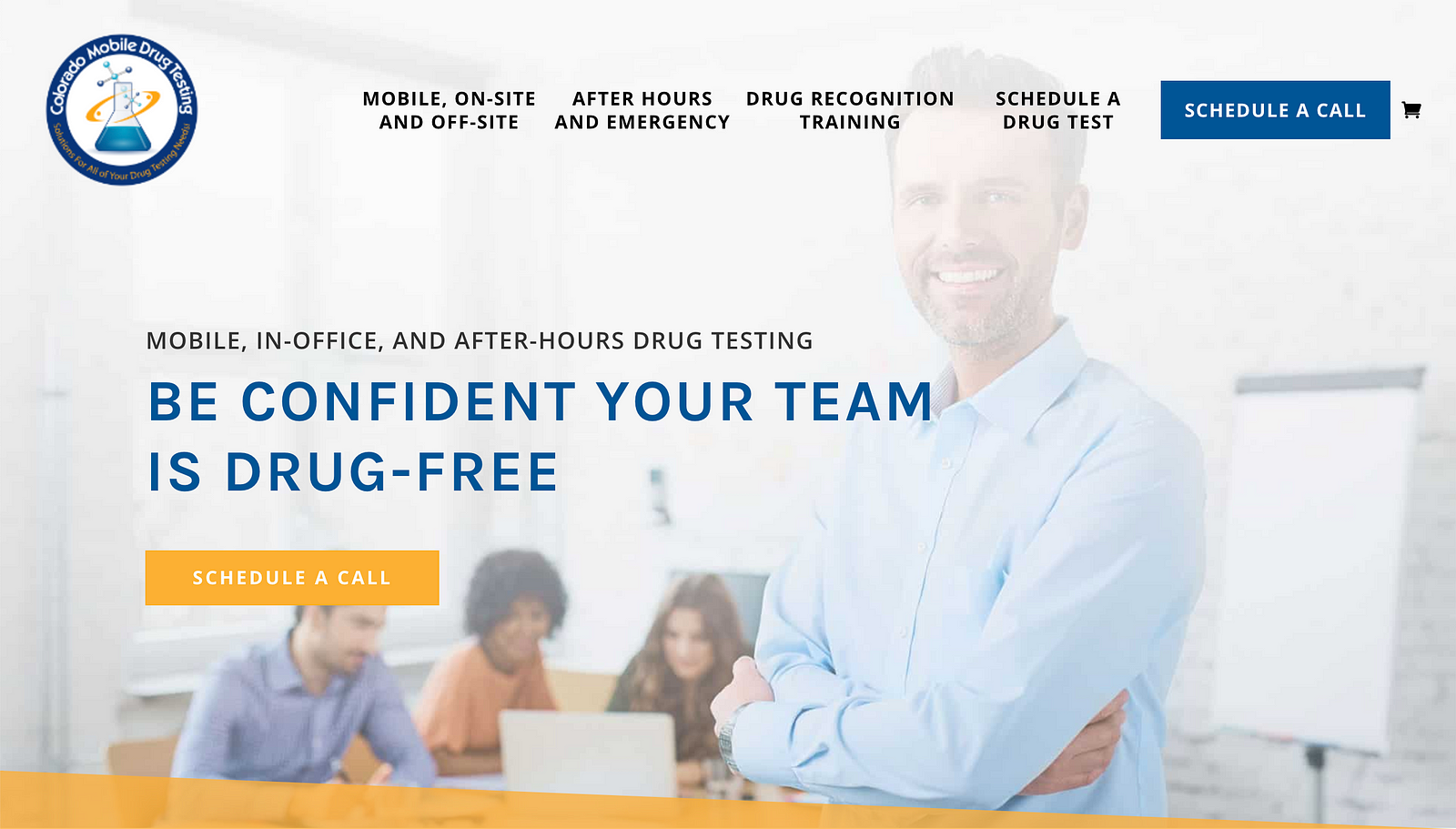
All of the pieces that we have been talking about show up on this StoryBrand website example.
  1. What do they do? Drug testing anywhere.
  2. How does it make your life better? Gain confidence your team isn’t on drugs.
  3. How do you buy? The easy to spot call-to-action button.
This company’s target client is someone who is not sure if their team is drug-free. Furthermore, it is difficult to get employees to go to some off-site location and get drug-tested. This would make me uneasy. Especially if the work involved any kind of precision that could harm other people if attention to detail was lacking.
Who comes to the rescue? You can, by utilizing Colorado Mobile Testing. They come to you and do the testing at a time that works for your people. The company is not the hero, the customer is. They save the day by bringing along someone who can really help, by helping you keep your team drug-free.
Now that you understand these concepts and have seen them implemented in several StoryBrand website examples, do you feel more confident as you try to change your own messaging? I hope these examples both inspired you and challenged you to change some of the messaging on your own website.
Click here to download a StoryBrand website template you can use to upgrade your own website.
Don’t continue missing out on future revenue and customers because your messaging is clunky and obtuse. Learn from these StoryBrand website examples.
When people understand what you sell and how it makes their life better, they buy more. Take some time and see if you can get your website as clear as the StoryBrand website examples we looked at here.

Tuesday, May 14, 2019

YouTube's new 'Bumper Machine' automates 6-second ad production

  • YouTube is testing a software tool called "Bumper Machine" that aims to optimize video ads for mobile audiences, TechCrunch first reported. The video-editing tool uses machine learning to pick out key moments from a longer spot and condense them into six-second bumper ads, a format that the video-sharing site introduced three years ago.
  • Food delivery app GrubHub shortened two 13-second ads with Bumper Machine by identifying more exact marketing messages the company wanted to show. A GrubHub spokesperson told MediaPost that the short-form videos gave it more flexibility in its ad placements as part of ongoing campaigns.
  • The Bumper Machine looks at video spots and identifies elements such as human characters, motion, sharpness of the focus and quality of the framing. It can help marketers to identify the message and how best to convey that in six seconds, Vishal Sharma, VP of product management at YouTube, told MediaPost.

Insight:

YouTube developed bumper ads, which appear at the beginning of videos on its site, to be less intrusive for mobile viewers who don't want their viewing experience interrupted. By using machine learning to fuel the Bumper Machine, YouTube could encourage adoption of the six-second format by cutting costs for mobile marketers who can rely on artificial intelligence to edit previously produced ads and repurpose old content.
Agency creative executives have fretted that the short ads make it harder to make an emotional connection with viewers, but other studies have shown that viewers can mentally process an ad quickly. Mobile ads start triggering an emotional response in consumers in less than half a second, according to a study by brain researcher Neurons for the Mobile Marketing Association. On TV, six-second ads captured 8% to 11% more attention per second than longer ads, per a study by the Advertising Research Foundation (ARF) and TVision Insights.
MARKETING DIVE
Want news like this in your inbox?
Our free newsletter will keep you up-to-speed on the latest marketing news & trends. From social media advertising to marketing tech, we'll deliver the marketing intel you need to know.
Sign Up
YouTube's Bumper Machine test comes as research shows that mobile video ads are a key driver of digital media spending. U.S. mobile advertising grew 40% to $69.9 billion last year, making up 65% of total digital ad revenue, per an annual report by the Interactive Advertising Bureau and PwC. Digital video ads on mobile devices expanded 65% to $10.2 billion, outpacing the 37% growth for digital video in all formats, including personal computers. Mobile video ads are forecast to grow as high-speed 5G mobile networks expand nationwide over the next few years.
Google-owned YouTube isn't the only platform expanding its inventory of six-second ads. Snapchat last month announced plans to introduce a service to let brands reserve and buy non-skip, six-second commercials during premium shows in the image-messaging app's Discover section. The Snap Select service features ad inventory in Snap Originals, sports programming and premium shows on a fixed cost-per-thousand impressions (CPM) basis.

Wednesday, May 8, 2019

techniques to truly understand your customers’ needs

Understanding and meeting your customers’ needs can be challenging, especially with market forces constantly changingTo succeed, you need to be a good listener and discover how your customers feel about your product.
Take the charismatic fishmonger Richard Waasdorp, who livens up a fish cart in Amstelveen, near Amsterdam, in the Netherlands.
Amstelveen has a large Japanese community, which didn’t escape Waasdorps’ notice. To better service this valuable client base, Waasdorp had the bright idea to learn how to speak Japanese and to travel to Japan to learn more about the types of fish and cuts that would please them most.
Not all of the skills that stem from those person-to-person transactions translate well to an online business, but a bunch of them do – and might be underutilized in an era of big data and algorithms.
Luckily, as an online organization, there are specialized techniques you can use to tap into your customers’ desires.

#1 Nurture your customer relationships 

When your customer gets a new product from you, hopefully, they’ll be so excited that the item is put to use right away. As the days of use go by, the customer will likely forget about your company, which is why you need to be looking ahead to his or her potential future needs.
Keep your company fresh in your customer’s mind after purchase. Invite them to follow your brand on social media or blog — this does mean you need to create valuable content and update — send out regular newsletters, or surveys asking for product feedback.
If you do this, you will reduce your churn rates and improve your chances that they convert on another product.

#2 Adjust your voice to customer preferences

To connect with your digital audience, you need to get two main things right: your tone and the words you use. Companies that really connect with their customers put a lot of effort into creating the message their writing conveys.
When you think about it, this makes a lot of sense. In a face-to-face conversation, around 55 percent of communication comes through body language and 38 percent through tone of voice.
Since you run an online business, you don’t have the luxury to use body language or literal tone of voice to your advantage. So, you need to create a solid strategy that gives your writing the right tone for your customers. Make sure your tone of voice is conversational, friendly and drop the jargon: no need to make things overly formal or complicated.
If you run online ads with short copy, experiment with a few different versions through A/B testing to find out which message best resonates with your audience.
And don’t stick to just your own language! Just like the Japanese-speaking fishmonger, if you know where the people that want your product are from, and you know what they want, you can adapt your keyword strategy to include other languages, dialects, or search terms that might be more popular with your customers.

#3 Map out their buying journeys

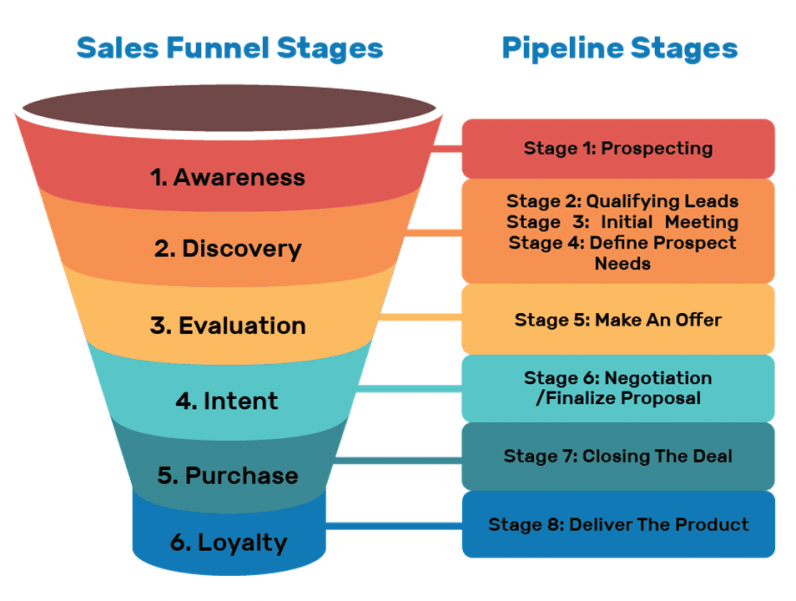
Although the process can differ slightly between customers, many go through a similar process when they think about a new product. The first thing that happens is the buyer becomes aware that he or she is missing something in life that could make it easier or more satisfactory.
The second is a thinking stage, where products that might help fix the issue are considered. A finalization process then begins, where the buyer picks the product he or she wants to try.
To better understand the needs of your customers, you need to look at each step of the buying journey. Create a specific roadmap that details what advances your customers down the sales funnel and then optimize the process to improve customer experience.

#4 Listen to the complaints

Hearing customer complaints and implementing solutions to common problems will elevate your business. When specific trends become known while you’re reviewing customer feedback, a change needs to be made.
To start this technique, look at the feedback on what you already have. Review your social media, product reviews, emails and more to see what’s not working for customers. After reading, implement specific solutions and allow them to take effect.
Several weeks afterward, look at the same review sources to see if the issues are still arising and determine if more problem solving is needed.

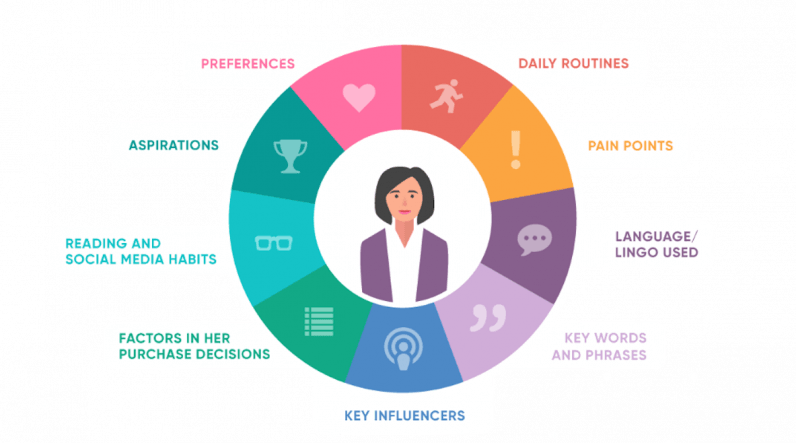
#5 Build data personas of your customers

When you’re starting a business, generic demographics are really helpful. In most cases, your customers can be divided into a few different groups that have different needs and preferences.

Running an online business gives you a myriad of possibilities to really connect with your customers. Encouraging them to follow you on social channels not only increases your visibility, but also your options to interact.
As you grow as a business, though, general buyer personas lose their worth. To win and maintain your customers, you need to personalize your messaging (see #2 Adjust your voice to customer preferences).

#6 Evaluate your competitors

If you’re not bringing a new product to market, there is a good chance your customers have bought something similar in the past from another company.
People who are now buying from you stopped doing business with another entity, but why? Finding out the reasons the customer wasn’t happy with his or her past supplier might help you avoid similar issues in your future.
To get this information, you will want to ask customers directly. Select a handful of customers, and a week after their purchases are delivered call or email them to see how everything is going. In your communication, ask them specific questions about their old supplier and why they’re no longer giving them business.

#7 Look through the data

If you run a digital business, you have access to tons of customer analytics. Every time a visitor navigates your website,  you can collect valuable information about their behaviors and preferences. With analytical data analysis, you can understand your audience more to deliver what they need most.  
Google Analytics is an obvious (and free!) choice, but there are a bunch of services offering web analytics. It tells you who is visiting your website, how they found it, which pages they visit and how long much time they spent there, among many other things.

#8 Don’t breeze over keywords

Keywords can help you learn how customers are searching online for your products and company. You might already have a few keywords in mind, and you can test them with a keyword research tool.
As you type in your words, you’ll find out what ones work so you can start incorporating them into your copy. While you’re at it, you’ll also discover related keywords you might have otherwise missed.

#9 Tap into your sales team

Both brick-and-mortar and online stores benefit from hiring sales associates.
These employees talk with clients several times a day, helping them to become acquainted with customer wants and needs. A sales staff can also gain insight as far as what’s not going right for a customer and how your company can better serve his or her needs.

It can be tricky, but it’s possible

Thoroughly understanding customer needs is an important part of any business. Unfortunately, it’s hard to know the wants of your customers without putting in a little bit of work.
With the nine smart techniques above, you’ll be on the path to better understanding your customers’ needs and catering to their desires.