Monday, May 9, 2016

#SocialSkim: What Facebook's Algorithm Change Means

This week's all about optimization and user experience—from the social network and brand perspectives. Facebook grabbed headlines with a big algorithm change that aims to reward high-quality content, and social media industry leaders united to stress the gravity of live video.
We'll also divulge all the details about Facebook's rumored standalone camera app meant to rival Snapchat, share surefire ways for your brand to build a successful presence on messaging platforms like WhatsApp, and tip you off about the best tools for upping your Instagram game.
Skim for all the latest!
Facebook tweaks News Feed algorithm in effort to boost engagement
The social network announced a series of algorithm tweaks affecting what posts are likely to appear in a user's Timeline.

Click Here!
The first tweak places higher priority on engagement time, which not only reflects whether a user liked or commented on a post but also now uses data from Instant Articles and the like to see how long those users spent on similar posts from an author or publisher in the past.
Facebook's second adjustment will reduce how often people see several posts from the same publisher in a row, a response to user complaints that their Timeline content is becoming repetitive and boring.
The company notes that publishers may see a very small increase or decrease in traffic, but says no significant changes are expected. In all, the shift is a move toward quality over quantity, and should reduce the amount of clickbait we see.
1. Social marketing leaders converge to spotlight the importance of live video
Marketing nerds of the world descended on San Diego this week for the world's largest social media conference, where industry leaders made two things clear: Snapchat has shed its awkward adolescence and now demands the attention of all, and live video has become the most vital form of content.
That may not sound like a revelation to those of you who 'Skim with us every week, but there's a shift in social that takes us beyond posting and commenting, and now all but requires a combination of elements, including audio, video, live video, and image creation. It's a more complex puzzle that requires a whole new way of thinking, and an entirely new approach to content marketing.
In short: that meeting you keep pushing back between your strategy and creative departments needs to happen now.
2. Snapchat quietly kills its in-app payment option
After a failed attempt to get consumers to pay the network directly for the privilege of re-playing snaps, the ephemeral photo-sharing platform shuttered its in-app payment option.
This comes just two months after the company stopped selling lenses back in January, signaling that the app might have difficulty expanding its revenue streams outside of its core ad business.
In a bright spot, Snapchat has seen success with its new On-Demand Geofilters, which allow individuals and organizations to design and buy filters at affordable rates.
3. Facebook reportedly plans to take on Snapchat with standalone camera app
A report from the Wall Street Journal says the social network has tasked its London team with developing a Snapchat competitor in the form of a standalone camera app that incorporates livestreaming capabilities.
Even if it comes to fruition, any consumer-ready product is a long-way off, and Facebook has reportedly declined to comment further. Given the mixed-bag of success with previous app endeavors, we'll have to wait this one out to see whether it truly becomes a Snapchat killer.
4. YouTube rolls out six-second video ad product
They're called Bumper ads, and their unskippable, six-second format is best on mobile, where snackable video bits perform well. Do you think your brand could tell its story in six seconds, like Audi did in its Bumper ad below? Let us know in the comments!
5. For many publishers, Twitter video beats Facebook
Mark Zuckerberg's aversion to pre-roll video ads because of what he views as a terrible user experience has given Twitter a first-mover advantage in monetization.
Twitter's reach might pale in comparison with Facebook's, but mainstream media publishing partners such as Mashable are making hundreds of thousands of dollars in revenue per month via Twitter's pre-roll video and revenue-sharing program, Amplify. Comparatively, publishers are making virtually nothing on Facebook.
Facebook might find the key to balancing user experience and ad revenue for video soon; but, until that happens, Twitter will be leading the pack for many.
6. Twitter delivers slight user growth, but investors remain wary
The social network's quarterly report highlights 5 million new users after a drop last year, bringing the platform to 310 million monthly active users. But investors aren't convinced of Twitter's long-term viability, noting that the company's revenue fell short of expectations, which indicates that marketers aren't increasing spending as quickly as hoped.
7. The ultimate guide to marketing on WhatsApp
With more than one billion active users worldwide and 30 billion messages sent daily, WhatsApp is ripe for marketers. From the pros and cons of the platform from a business perspective, to prime examples of brand campaigns, let us demystify the medium with the ultimate guide to marketing on WhatsApp. Also, check out a great example of engagement by Absolut Vodka:
8. How to best connect with consumers via social media messengers
We've talked a lot about the rise of messaging platforms as the new and exciting medium for businesses to engage with consumers, but how should brands tackle their new responsibility? We've got five pro tips on how to best use the platforms to connect with customers:
  1. Stay true to your brand. Don't stray away from the qualities that make your brand what it is. Carry the same personality traits to messaging platforms by avoiding scripted, copy-and-paste replies that will rile up consumers.
  2. Provide real-time customer service. Take advantage of the immediacy of messaging to resolve customer issues quickly. Don't redirect them to website FAQs.
  3. Take conversations private. Use Twitter's direct message embed feature and Facebook's ability to reply to customer posts via Messenger to discuss details in private.
  4. Treat customers like people. Which they are, of course. Don't just personalize your communications, be personal and personable. Show emotion and listen.
  5. Sound human. People know when they're talking to a robot. Make sure your conversations sound like person-to-person exchanges and not automation.
9. Facebook's long game to triple its user base could affect tech economy forever
Key to Mark Zuckerberg's plans to onboard two billion more Facebook users is the company's goal to bring those users—often in developing countries—online. But since the cost of Internet access in those regions makes doing so difficult, Facebook has done something that jeopardizes the survival of many of today's tech giants: embraced open source concepts.
Open source projects help create products that lets Facebook spread its service at the fraction of the cost of traditional tech companies, and the social network views this decrease in cost of tech products as key to lowering the cost of telecommunications networks, and ultimately the cost for users to join Facebook. Whether the long term plan materializes or not, Facebook's strategy indicates that it's serious about moving into far deeper territory than your News Feed.
10. How user-generated content on social boosts brand value
A new report from Bazaarvoice suggests that brands might be able to do a bit less work, because simply interacting with user-generated content (UGC), or as it calls it, consumer-generated content (CGC), is enough to convert users and increase revenues.
Conversion increases 78% for brands that use UGC in their social marketing strategies, yet only 61% of brands use it. Considering UGC's benefits, here's an important refresher: UGC doesn't have to come in the form of complex, consumer-generated product idea campaigns, but also includes simple things like critical ratings and customer reviews, a picture or video, or a brief comment.
With stats like these, incorporating UGC is a no-brainer:
11. Six tools to help your company shine on Instagram
Instagram is a tricky platform for some, with many B2B marketers thinking it simply doesn't fit the nature of their business. But, Instagram is growing faster than Twitter or Facebook, so now's the time to get your Insta strategy in tip-top shape if you haven't already.
From developing a signature filter look and embedding your feed on your website for more visibility, to platforms to track your performance and schedule posts, read through this list of six indispensable tools. Trust us, you'll be happy you did.
12. We'll wrap with how brands marked Prince's death on social (Hint: some, not so well)
America lost its Prince last week, and brands of all stripes took to social to share messages of mourning and reminisce on the music legend's career. Some showed genuine efforts to honor the singer, while others came off as opportunistic and product-pushing. Users didn't respond well to the latter.
General Mills and 3M missed the mark and riled up users with what appeared to fans as pure opportunistic marketing. Spotify and NASA won the day, with messages without commercial elements.
Brands, before you post about current events, ask yourself whether you're pushing products and get an opinion from outside the organization. Even if you've nothing to say at all, silence is better than a PR disaster.


Read more: http://www.marketingprofs.com/chirp/2016/29831/socialskim-what-facebooks-algorithm-change-means-plus-12-more-stories-in-this-weeks-roundup#ixzz48A3lEZo1

Wednesday, May 4, 2016

10 of the Best Brands on Snapchat Right Now

best-brands-snapchat.jpeg
It used to be that Snapchat was seen as a platform geared mostly toward teens and pre-teens. But over the last several years, Snapchat has added features and made changes that have helped to move it into a much broader space.
No longer are they a niche photo-messaging service -- they've become an established media platform valued at over $16 billion and with over 100 million users. As for the age range of their users, eMarketer reported that 45% of all Snapchat users in the U.S. are between the ages of 18 and 24, and comScore found that 60% of U.S. smartphone users ages 13 to 24 use Snapchat.
That's why brands from every industry and with all manner of target demographic -- from Sour Patch Kids to General Electric, and even HubSpot -- are using Snapchat to connect with their fans and customers in a way that's low-cost, but highly personal and engaging. You'll notice the content they post on Snapchat isn't polished: it's raw and scrappy and fun. After all, Snapchat is all about letting your brand personality shine and relating to your target audience on a totally human level.
Before we list the best brands to follow on Snapchat, let's be sure we all know how to follow brands on Snapchat and view their content in the first place.

(Click here to skip ahead to the best brands on Snapchat.)

How to Follow Brands on Snapchat

To follow brands on Snapchat, you'll first have to make a Snapchat account of your own. Snapchat accounts are nothing fancy: no profile picture, no bio, no URL to your website. All you really have to do is download the free Snapchat app (for iOS here or for Android here), and then create an account by entering your email, a username, and a password.
Once you've made an account, you're ready to find and follow brands (and other users).
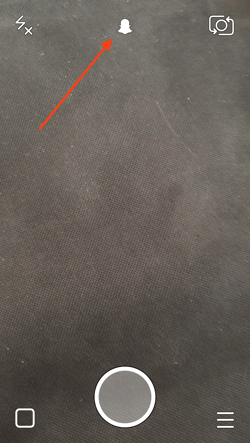
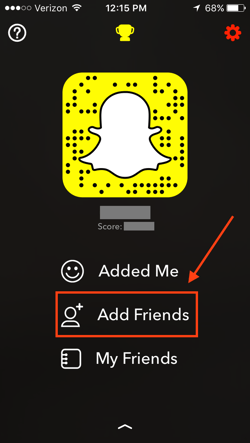
Step 1: Open the Snapchat app and click the ghost icon at the top center of your camera screen (below, left). You'll be taken to your home screen (below, right).
Step 2: On the home screen, add friends by clicking the "Add Friends" option.
snapchat-picture-screen.png snapchat-home-screen.png
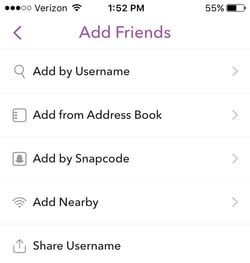
Step 3: Time to add some friends. You can add friends in a few ways: by username, from your address book (i.e. your phone's contacts list), by Snapcode, or from someone nearby.
snapchat-add-friends-page.jpg
To add folks by username, you'll have to type in exact usernames to find people, as there is no account suggestion option like other social networks have. For example, Sour Patch Kids' Snapchat username is @sourpatchsnaps, not @sourpatchkids -- but you'll have to type that.
To add a user by scanning their Snapcode, simply take a picture or screenshot of a user's Snapcode with your mobile device. Then, find the "Add by Snapcode" option by following the steps outlined above, and choose the photo you took of the Snapcode. The app will recognize the Snapcode and add the person automatically.
(The list of brands below includes each brand's Snapcode, so if you're reading this post on your mobile device, you can try adding these brands on Snapchat by screenshotting the Snapcodes as you read. Then, later, open the Snapchat app and find "Add by Snapcode" -- and you can add each brand one-by-one by finding the corresponding screenshot in your saved photos.)
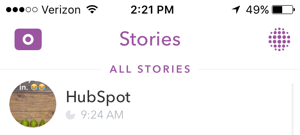
Step 4: Once you follow the brands you want on Snapchat, you can view their Snapchat content the same way you'd view your friends' Snapchat Stories: Open the Snapchat app, and then swipe the whole screen left to get to your Stories.
Brands aren't set apart from other users, so you'll have to find the brands among your friends. Click on a brand's username to view their Story.
search-stories.png
Now that you know how to find and follow brands on Snapchat and view their Stories, let's get into the best brands to follow on Snapchat.

10 of the Best Brands on Snapchat 

1) Sour Patch Kids

Username: @sourpatchsnaps

Sour_Patch_Snapchat_Snapcode_.png
Many of the earliest adopters of Snapchat were teenagers, which gave the snack company, Modelez, an incentive to hop on the platform to promote its Sour Patch Kids candy brand. 
In 2014, one of the company's major goals was to grow awareness among their core demographic: candy-loving teenagers in the United States. Because teenagers were reportedly spending more and more time on Snapchat, they decided to go there to create fun content teens could share with one another. 
The video below is an excerpt from one of its first campaigns back in 2014, called "Real-life Sour Patch Kid." For the campaign, the company teamed up with Logan Paul, a social media influencer and comedian, who spent five days recording pranks around New York City via Snapchat. It was a play off the brand tagline, “First they’re sour, then they’re sweet,” as the pranks went from "sweet" at the beginning of the five days to more "sour" pranks as the week went on.
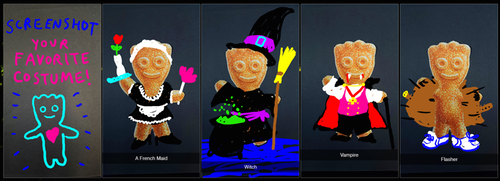
Each month, new Stories were released showing the "Real Sour Patch Kids" acting like regular teenagers. Below is an example of them showcasing their "favorite Halloween costumes":
sour-patch-kids-snapchat-halloween-1.png
Image Credit: Shorty Awards

2) Everlane

Username: @EVERLANE

Everlane_Snapchat_Snapcode_.png
The retail company Everlane was another early Snapchat adopter, but with an even more daring approach to the then-new social platform. In November 2015, they wrote this on their official blog: "We’re here to make a bold claim. Snapchat is going to become the defacto social channel for Everlane. Over the past month, we’ve been testing it in small batches and we’re in love."
Why did they love it so much? Because they found it was an even better way to showcase their radical approach to transparency than other social networks like Facebook.
"Facebook is a spot for updating our community and having one on one conversations," read the post. "But Snapchat is completely different. Snapchat gives us the chance to explore transparency in a completely new way. No fancy cameras. No editing. Just raw, live, footage. It’s beautiful, and it’s the platform for the modern generation."
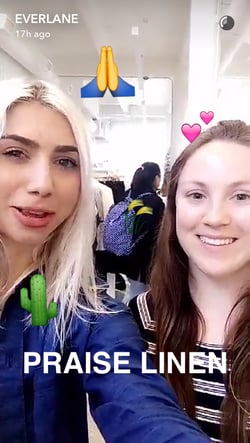
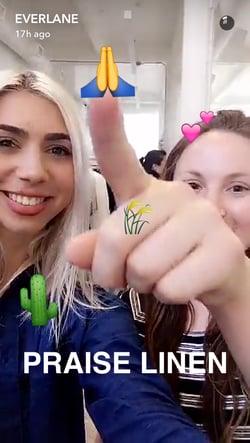
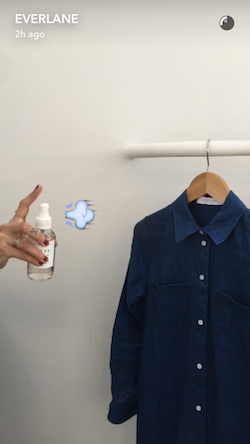
Almost a year and a half later, they haven't turned back. The folks at Everlane use Snapchat as kind of a backstage pass into their ecommerce business, their events, and their culture. They use the Snapchat Story feature to create narratives around giving tours of their spaces, interviewing customers in their brick-and-mortar stores, and previewing new products. On #TransparencyTuesday, for example, they use Snapchat to record a walkthrough of their business or factories.
everlane-snapchat-1.png everlane-snapchat-2.png
everlane-snapchat-3.png everlane-snapchat-4.png

3) General Electric

Username: @generalelectric

GE_Snapchat_Snapcode_.png
Would you ever have guessed that General Electric, a multinational conglomerate corporation, would have an active and effective presence on Snapchat?
They've actually done an awesome job of using their platform to showcase their geeky personality and to encourage interest in science -- something they've done well on other social media networks like Instagram and YouTube. 
One of the best ways they use the platform is in a series in which they answer users' questions by explaining scientific concepts in a concise and fun way. For example, they recently shared some of their findings from their emoji science curriculum, which they established along with the National Science Foundation.
In addition to sharing their emoji science findings, they also encourage their Snapchat followers to interact directly with them. "Just add ‘generalelectric’ on Snapchat, send us an emoji, and we’ll send you some science," they wrote on their Tumblr. Here's an example of the "science" followers might get in return:
GE's global director of innovation Sam Olstein said about Snapchat, "The disappearing nature of its content encourages repeat usage and provides us with a unique way to celebrate invention with an expanding community of young fans."
(To learn more about GE’s creative content, check out this episode of The Growth Show.)

4) Gatorade

Gatorade doesn't have a Snapchat account of its own, but thanks to their epic sponsored lens Snapchat at the Super Bowl this year, we think they deserve a place on this list. (Note: A Snapchat lens is essentially a creative filter for your selfies. It's what you see when your friends send Snapchats of them puking rainbows. Learn how to use Snapchat lenses here.)
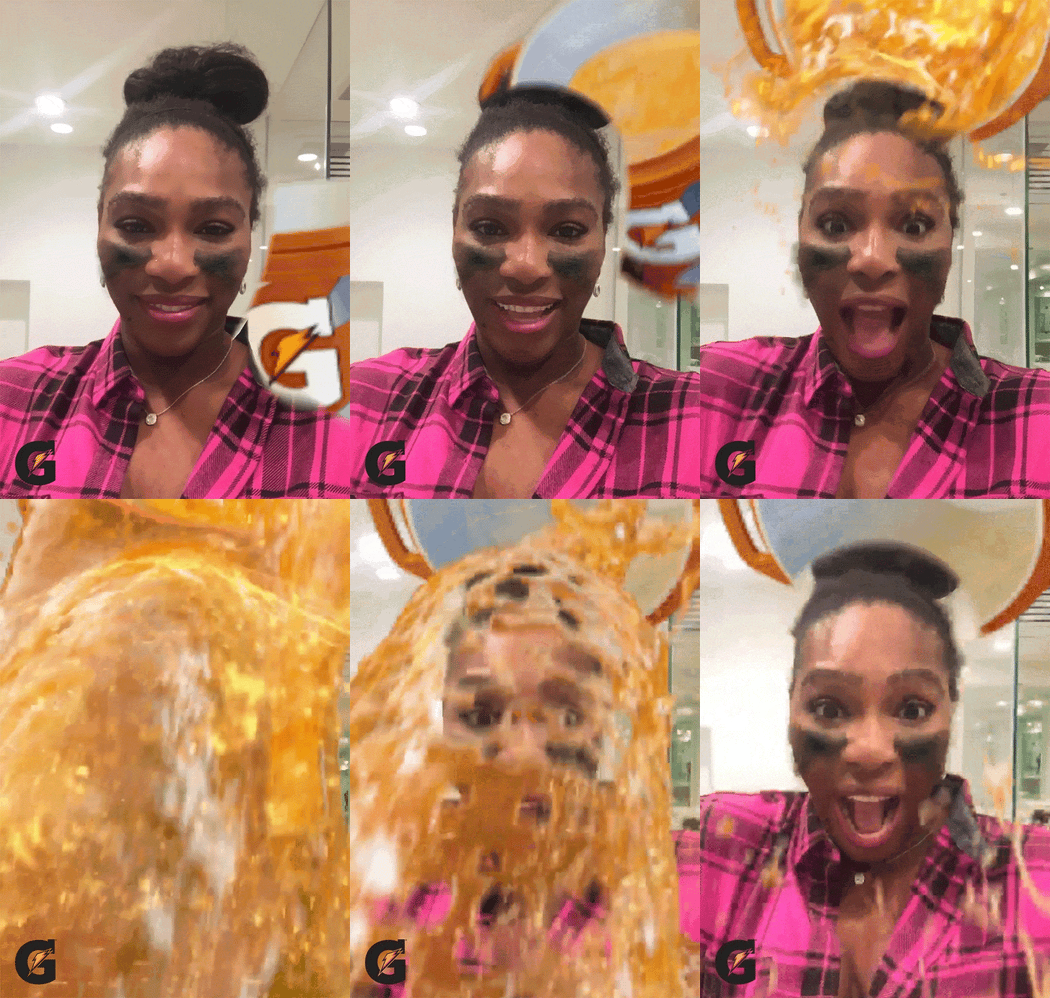
Here's what they did: When a football team wins a game, it's customary that the team dumps whatever sports drink is in the team cooler onto their coach's head. During the Super Bowl football game in 2016, the folks at PepsiCo-owned Gatorade released a genius Super Bowl Snapchat lens that let anyone give themselves a Gatorade bath, too.
gatorade-snapchat-filter-super-bowl.gif
Image Credit: Adweek
To create the ad, the folks at Gatorade partnered with Snapchat to purchase a sponsored lens, which costs around $450,000 per sponsored lens on normal days, and up to $750,000 on "peak days" like holidays and the Super Bowl.
Then, they had professional tennis player Serena Williams -- whom Gatorade sponsors -- star in the ad above. The ad shows her getting virtually "dumped on" by a cooler of orange Gatorade, thanks to the lens. The company tweeted out a GIF of the Snapchatto get the momentum going, and by the end of the day, the sponsored lens had reportedly been viewed over 100 million times.

5) Warby Parker

Username: @warbyparker

Warby_Parker_Snapchat_Snapcode_.png
At Warby Parker, Snapchat is used for a variety of topics: everything from showcasing their products ("Today on Snapchat, we try on our favorite Crystal frames in 15 seconds") to giving users a chance to hear from the company's co-founder Neil Blumenthal ("Our co-founder Neil Blumenthal is inside the secret room today. Tune in on Snapchat as he answers your questions!").
They have several Snapchat series, including a brand new one called "Desk Job." In one recent Snapchat Story, they featured one of their brand creative managers for his five desk essentials. Once a Snapchat Story is up, they promote them on Twitter, Instagram, and LinkedIn. (I noticed they didn't promote them on Facebook, which is probably a good thing: On Facebook, it's important not be selective about what you publish and focus on quality, rather than quantity, of posts.)

6) GrubHub

Username: @grubhub

GrubHub_Snapchat_Snapcode_.png
GrubHub, also an early Snapchat adopter, has been putting out content on about a weekly basis since late 2013. But they use Snapchat a little differently than many of the folks on this list. Rather than producing one-way content, GrubHub focuses on building out an active community by sending out Snapchat messages that require responses, like exclusive coupons, contests, giveaways, and promotional codes.
They became one of the only brands to interact with almost every single Snapchat message sent to them by users, every single day of the week. By the end of 2014, GrubHub had earned the highest Snapchat score of any brand (53,668 at that time). This impressive commitment to engagement earned them a finalist spot in the Shorty Awards.
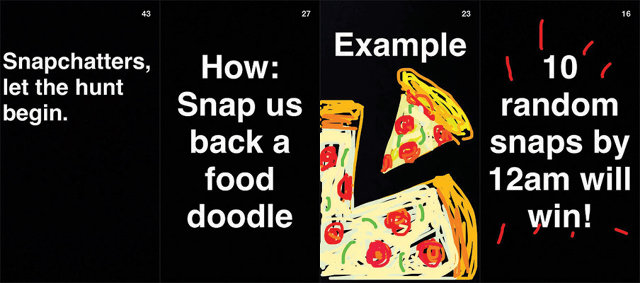
The screenshots below are from a story they released where followers could send back a Snapchat of a "food doodle" for a chance to win a prize. (You can watch the Story in its entirety here.)
grubhub-snapchat.jpg
Image Credit: Fast Company

7) The New York Times

Username: @thenytimes

Screen_Shot_2016-04-26_at_11.46.24_AM.png
The writers, editors, and other folks at The New York Times use Snapchat a little differently -- sometimes poking fun at their misunderstanding of it, other times using it as a storytelling platform (and then analyzing it in writing later).
For example, check out the Snapchat Story below from Nick Bilton, one of The Times' writers. The Story is very meta: It shows his friend teaching him how to use Snapchat so he can write a story for The Times about how to write Snapchat Stories.
Like other brands, it's very much a raw, behind-the-scenes look into the life of the writer. "I'm not actually writing right now. I'm just kind of pretending," says Bilton at one point during the Story. 
Here's another example of a Snapchat Story from The Times that's a little more serious. This one was part of an analysis of what makes an objectively good Snapchat Story, which later culminated in this piece by Talya Minsberg. For the piece, she recruited journalists at The Times to participate in a mobile challenge to create an objectively good Snapchat Story.
So, what makes an objective good Snapchat Story? Minsberg says it's nearly impossible to define, but that "the best Snapchat stories generally are ones that tell a narrative in a personal, visual way that pulls in and keeps the viewer."
Another important takeaway from her piece is this: "Even Snapchat stories must uphold the same standards as anything else published by The Times. There are just more doodles and emojis in a Snapchat story than you would see in print!"

8) DJ Khaled

Username: @djkhaled305

DJ_Khaled_Snapchat_Snapcode_.png
DJ Khaled may not be your typical brand, but he has single-handedly redefined the celebrity presence on Snapchat -- and there's a lot brands can learn from him. In March 2016, less than a year after DJ Khaled had even heard of the app, it was reported that his Snapchats were attracting around 3 million to 4 million viewers each.
What's his secret? First, his style of shooting videos is really effective. He likes to pair mundane daily routines -- like putting on deodorant and watering his plants -- with funny commentary and one-liners. 
He has some mantras he repeats like "another one" and "bless up," which he's parlayed into some really expensive merchandise. He also likes to share "keys to wisdom," and even got his own geofilter on a road trip to Las Vegas for New Year's Eve (which anyone can do, by the way).
The combination of backstage pass-like topics, hilarious one-liners, and fun use of emojis makes Khaled's account very shareable and followable.

9) Domino's Pizza UK

Username: @DOMINOS_UK

Screen_Shot_2016-04-26_at_11.47.31_AM.png
The folks at Dominos Pizza have never been afraid to experiment with new social media channels. They were the first brand to use Tinder as part of a 2015 Valentine’s Day campaign, and their "Tweet to Eat" campaign let fans order pizza via Twitter by sending a pizza emoji.
As for their global presence, their social media teams around the world have adopted the platform at different times. For example, Dominos Australia started using Snapchat as early as 2013, sending out Snapchat Stories (like the one screenshotted below) that aligned with campaigns they were doing elsewhere on social media.
dominos-australia-snapchat.jpg
Image Credit: brandchannel
The U.K. team at Dominos Pizza didn't get on Snapchat until January 2016, but they started out with a pretty cool experiment that led to a lift in orders. On January 20, 2016, they turned their Snapchat Story into a short film, titled "Dough to Door."
The film follows the journey of a Dominos delivery driver who hits a few obstacles on his way to deliver a pizza to a customer -- including an alien invasion. According toThe Drum, they also showed a sequence of random letters throughout the film that amount to an exclusive discount code they could then use online.
The folks at Dominos found that the low-budget effort led to an increase in orders. "The film drove a lot more orders then we would’ve expected even though it wasn’t really a massive driver for us," Nick Dutch, Dominos' head of digital strategy, told Business Insider. 
Because Snapchat doesn't offer much in the way of analytics (unless you are using Snapchat for paid advertising), the only way Dutch's team was able to attribute that increase in orders to Snapchat was because of the unique discount code -- so keep that in mind when you're creating Stories of your own.

10) HubSpot

Username: @hubspotinc

 HubSpot_Snapchat_Snapcode_.png
While there are a lot of B2C brands doing cool things with Snapchat, there are far fewer B2B companies that have successfully built a following. This is a challenge we wanted to take on here at HubSpot, which is why we launched our Snapchat channel in March 2016.
To make our Snapchat channel valuable, we're using it to serve as both a marketing and a recruiting channel -- a place where we can showcase our unique culture and perks, our awesome employees, and the inbound philosophy.
On the marketing side, we like to give followers a good look inside the company and showcase our culture. The goal here is to be educational, informative, and lovable, which are very familiar goals on our marketing team.
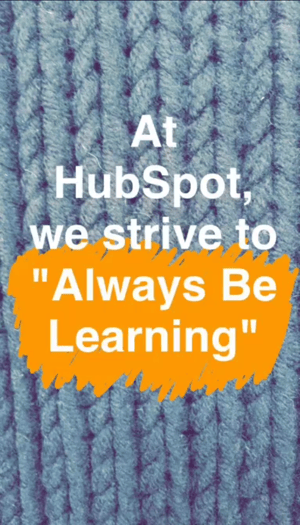
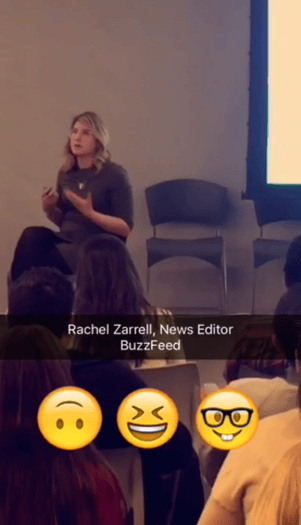
For example, when BuzzFeed News Editor Rachel Zarrell came to HubSpot a few weeks ago to speak about viral content, we showcased some of her talk -- and what employees thought about it afterward -- on Snapchat.
hubspot-snapchat-always-be-learning.png hubspot-snapchat-rachel-zarrell.png
On the culture side, we want to position HubSpot as a destination -- and hopefully spur viewers to check out our other online offers like our blog, website, careers page, and so on. The key for us is using a human voice that fits in the Snapchat world, rather than a voice that's stuffy or ultra-professional. 
hubspot-snapchat-trees-1.png hubspot-snapchat-trees-2.png

https://blog.hubspot.com/marketing/snapchat-best-brands?utm_campaign=blog-rss-emails&utm_source=hs_email&utm_medium=email&utm_content=28962879#sm.000022qt0lidtd8qvko1a2fx8pl5s